The Source / A field guide to feeling better
Ankle & Foot
A rolled ankle and a painful first step in the morning belong to different stories. Start with yours.
Can you point to it?
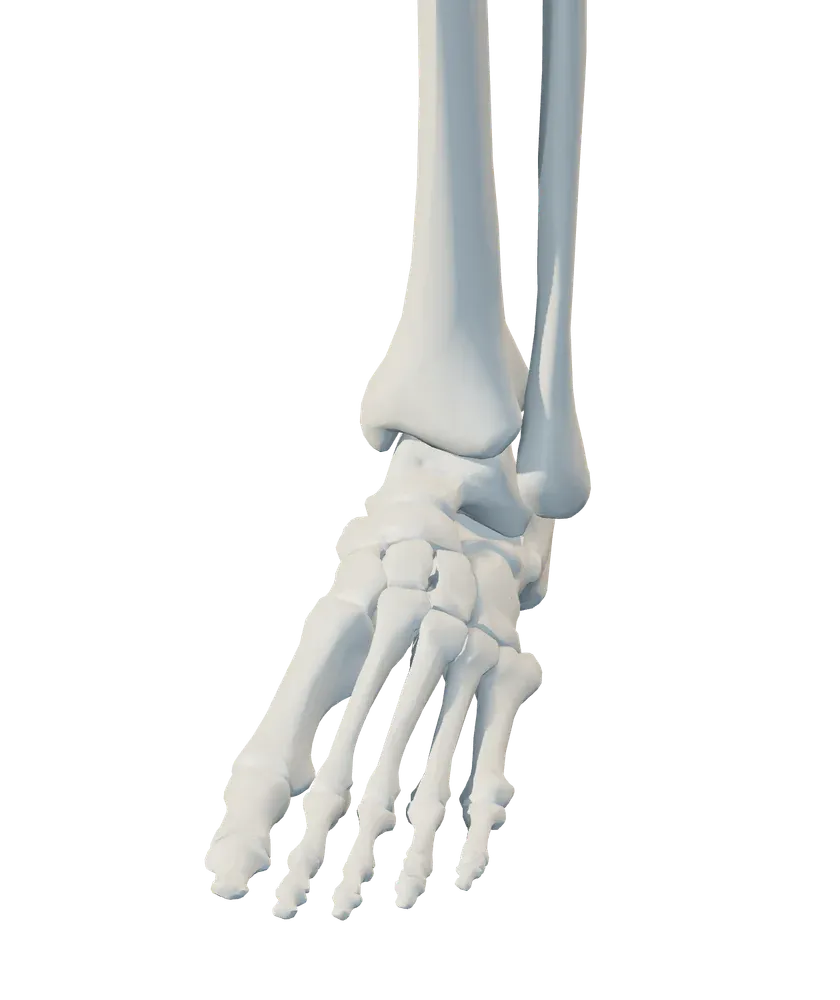
Select a label to explore its side of the body
Choose the closest area.
Select a point on the close-up, or choose below. You’ll find possible explanations, questions to bring to a visit, and the evidence behind the discussion.
Put the symptoms in context
Injury history, the exact pain location, swelling and the ability to bear weight help guide assessment. Rebuilding walking, balance or running capacity should follow the diagnosis.
Follow the question
Explore ankle & foot
These guides describe possibilities, not a diagnosis. Each explains what to ask, where the evidence applies and when another kind of care is needed.
- Condition guide
Ankle sprains
Early assessment, rebuilding balance and confidence, and when an injury may be a fracture.
Understand this condition - Condition guide
Plantar heel pain
Pain under the heel, especially on the first steps, and a gradual approach to loading the foot.
Understand this condition - Condition guide
Arm & leg pain
Local joint and muscle symptoms versus pain traveling along a nerve.
Understand this condition
Sudden injury or painful first steps?
A rolled ankle belongs in the ankle-sprain guide, which starts with assessment and warning signs before rehabilitation. Pain beneath the heel after resting is discussed in plantar heel pain. Neither pattern is a diagnosis on its own.
For an appointment, describe the exact location, any injury, your ability to bear weight and changes in walking, standing or training. Bring the shoes or activity details that help explain what a normal day involves.
Recovery includes confidence and capacity
Less pain is useful, but returning to a shift, a trail or a sport asks more of the foot. The ankle guide discusses balance and recurrence; the heel guide explains the limits of a stretching trial. Ask how progress will be measured for your activity, rather than relying on a fixed number of visits.
Follow the evidence
Research, with context.
Published sources behind the discussion. Read the findings alongside the limits; a study is not a diagnosis or a promise of a result.
Ankle Stability and Movement Coordination Impairments: Lateral Ankle Ligament Sprains Revision
People with lateral ankle sprains or chronic ankle instability.
What it foundThe guideline supports rehabilitation that includes mobility, balance and neuromuscular exercise. Manual therapy can accompany exercise.
What it cannot tell usThe plan depends on the injury and stage of recovery. These recommendations do not apply to fractures or establish that a brace alone resolves chronic instability.
Publication details & citation
Martin et al. Ankle Stability and Movement Coordination Impairments: Lateral Ankle Ligament Sprains Revision. Journal of Orthopaedic & Sports Physical Therapy. 2021. DOI: 10.2519/jospt.2021.0302.
Read the publication recordTissue-specific plantar fascia-stretching exercise enhances outcomes in patients with chronic heel pain. A prospective, randomized study
101 patients with plantar fasciitis lasting at least ten months.
What it foundPlantar fascia-specific stretching improved worst pain and first-step pain more at eight weeks than Achilles stretching.
What it cannot tell usOnly 82 patients returned. Both groups also received insoles, medication and education, so the results cannot be attributed to stretching alone or generalized to every heel problem.
Publication details & citation
DiGiovanni et al. Tissue-specific plantar fascia-stretching exercise enhances outcomes in patients with chronic heel pain. A prospective, randomized study. Journal of Bone and Joint Surgery. 2003. DOI: 10.2106/00004623-200307000-00013.
Read the publication record
Read our editorial policy for how sources and clinical review are identified.