Explore our chiropractic services
Modern tools.
Personal care.
Explore StemWave, Class IV laser, spinal decompression and hands-on care at Source Chiropractic.
A closer look at the technology
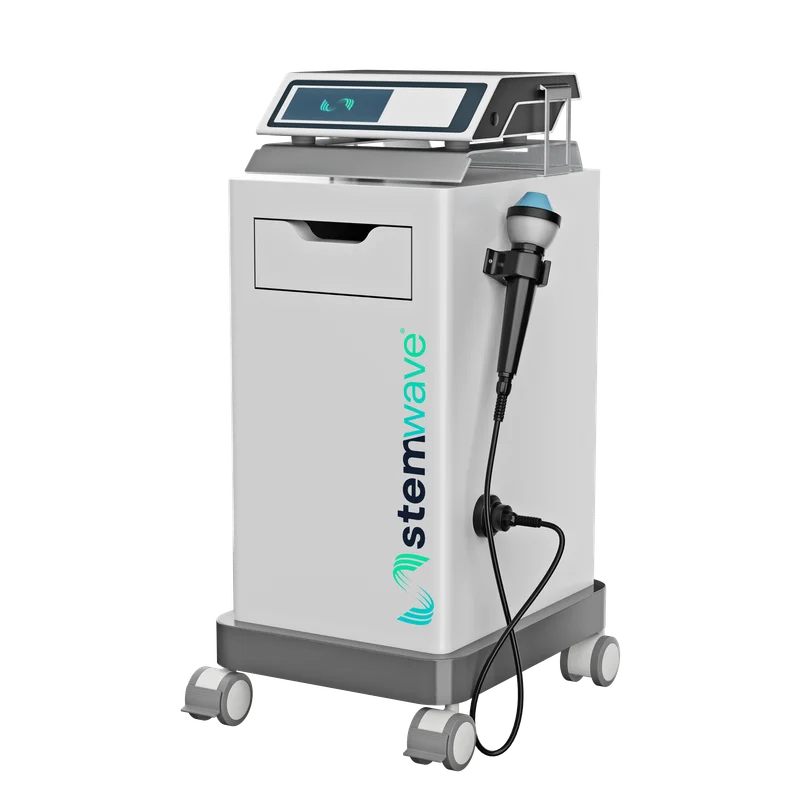
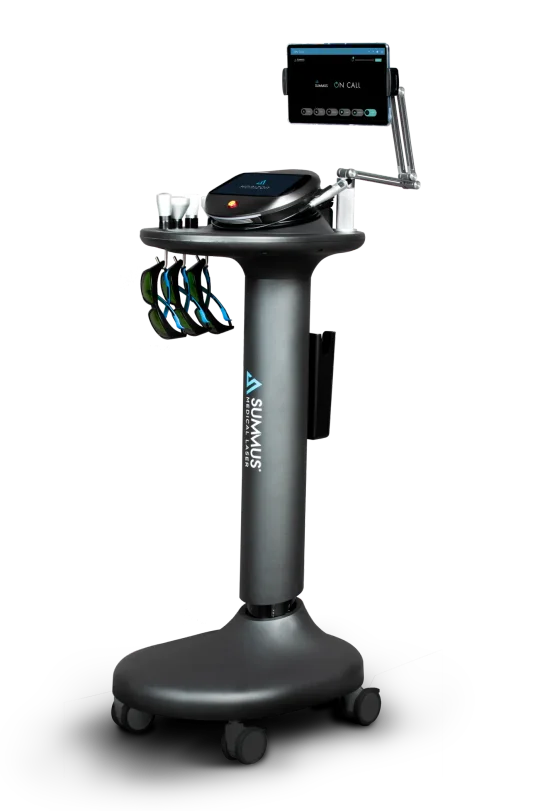
Explore either device Manufacturer imagery
More ways to approach your care.
How we choose together- Focused acoustic waves
StemWave
Meet the device and explore what a session involves.
Take a closer look - Summus Horizon
Class IV laser
Get to know the light-based technology used here.
Take a closer look - Table-based traction
Spinal decompression
See how controlled traction fits into the conversation.
Take a closer look - A different approach to muscle
Dry needling
Understand the technique, the experience and the precautions.
Take a closer look
Joint restriction and altered motion
A joint that is not moving through its normal range, or moves with pain or guarding. Found by hand, and by watching you move.
Discussed for this finding- General Chiropractic Care
Adjustment or manipulation may be used to address joint dysfunction and altered motion.
- Pediatric Chiropractic Care
The same procedure, adapted for a child, with a far longer list of things that belong to the pediatrician.
- Prenatal Chiropractic Care
The same procedure, with positioning and technique modified for pregnancy.
Active rehabilitation and exercise run alongside, to address weakness, stability and mobility. Each condition guide describes what that involves.
Muscle spasm, tension and trigger points
Taut bands, tender points that reproduce a familiar ache, and muscles that guard a joint instead of moving it.
Discussed for this finding- Dry Needling
Dry needling may be used to address appropriate muscular and soft-tissue components.
- Massage Therapy
Soft-tissue work by a licensed massage therapist, a separate profession working on the same tissue by hand.
- Laser and Red Light Therapy
Within the device’s stated uses, which include muscle spasm and muscle relaxation.
- StemWave Therapy
Within its registered use: temporary relief of minor muscle and joint aches and pains.
Disc-related findings
A history and examination that point at a disc: symptoms that follow a nerve into a limb, a pattern that changes with position, and findings that match on testing.
Discussed for this finding- Spinal Decompression
Spinal decompression may be incorporated for appropriate spinal and disc-related musculoskeletal conditions.
- General Chiropractic Care
Joint dysfunction alongside a disc problem is still addressed by hand, where the examination supports it.
Some disc presentations need medical assessment first, and the examination is where that is decided. The condition guides for disc injury and sciatica set out the warning signs.
Nerve irritation
Pain, numbness or tingling that follows a nerve rather than staying where it started. Strength and reflex testing decide how urgent it is, and whether the source is a joint, a disc, or something that is not ours.
Discussed for this finding- Spinal Decompression
Where the examination points at a disc-related source.
- General Chiropractic Care
Where a joint finding is part of the picture.
The decision about what is ours and what is referred comes before any therapy. That is the examination’s job, and it is the reason a nerve symptom is never treated from a web page.
Tendon and soft-tissue complaints
Pain when a tendon is loaded: the outer elbow when gripping, the shoulder when reaching, the heel on the first steps of the morning.
Discussed for this finding- StemWave Therapy
Within its registered use: temporary relief of minor muscle and joint aches and pains.
- Laser and Red Light Therapy
Within the device’s stated uses for minor pain and stiffness in muscles or joints.
- Dry Needling
Where a muscular component is found alongside the tendon complaint.
- Massage Therapy
Hands-on soft-tissue work by a licensed massage therapist.
For most tendon complaints the best-supported first step is a graded loading plan, not a device. Each condition guide says what that looks like.
Pregnancy-related mechanical pain
Load, posture and ligament laxity shift as a pregnancy progresses. Some aches are ordinary; some changes mean call your OB today, and the prenatal guide lists them first.
Discussed for this finding- Prenatal Chiropractic Care
A modified prenatal visit: positioning and technique adapted for pregnancy, and no claims about labor or birth.
Children and adolescents
Children are not small adults. The examination looks for a musculoskeletal complaint that is actually musculoskeletal, and sends the rest to your pediatrician.
Discussed for this finding- Pediatric Chiropractic Care
Care adapted for the age, with the evidence base described honestly, including where it is thin.
After the original problem settles
The complaint that brought you in has eased. The question now is whether continuing to come in is worth it, and that is a decision, not a default.
Discussed for this finding- Wellness Care
Continuing care, sometimes called maintenance care, with what the evidence supports and what it does not set out plainly.
Staying active is the part with the strongest evidence behind it, and it does not need an appointment.
A finding is established by examination, not by reading. Start from a symptom if you do not yet know what yours is.
02 / The services
10 services, by what they are
Each guide says what the service is, what it is used for here, its limits, and the questions to ask before booking.
Chiropractic adjustment
One procedure, a controlled force applied by hand to a specific joint, adapted for different patients and purposes.
- Service guide
General Chiropractic Care
What an adjustment is, what the techniques differ on, where the evidence is strong and where it is thin, and when the honest answer is a different provider.Understand this service - Service guide
Pediatric Chiropractic Care
How care is adapted for a child, why the evidence base is thinner at younger ages, and the much longer list of things that belong to your pediatrician.Understand this service - Service guide
Prenatal Chiropractic Care
Positioning and technique modified for a pregnancy that changes weekly, which aches are ordinary, and which ones mean call your OB today.Understand this service - Service guide
Wellness Care
Continuing to come in after the original problem has settled: what that is, what the evidence supports and what it does not, and what else is worth doing.Understand this service
Adjunct therapies
Added to a plan after an examination, each within its own stated use, and none of them a plan on its own.
- Service guide
Spinal Decompression
A table-based traction therapy used when the examination points at a disc. Passive, longer per session than an adjustment, and not the answer for every painful back.Understand this service - Service guide
Laser and Red Light Therapy
The Summus Horizon Class IV laser: its manufacturer’s stated uses, the muscle and joint complaints it is used alongside, and the claims we will not make for it.Understand this service - Service guide
StemWave Therapy
A focused acoustic wave device, registered for the temporary relief of minor muscle and joint aches and pains. Its stated use, its risks, and what the research does and does not show.Understand this service - Service guide
Dry Needling
A thin filament needle placed into a tight band of muscle, within a chiropractic physician’s authority in Tennessee. What it is, what it feels like, and its real risks.Understand this service
Soft tissue, a separate profession
Massage therapy is licensed separately in Tennessee and is performed here by licensed massage therapists, not by the chiropractors.
Measurement, not treatment
A tool that records how you stand. It treats nothing and diagnoses nothing; a diagnosis comes from the examination, not from a scan.
Care is listed here by procedure. If you arrived with a symptom rather than a procedure in mind, start at Conditions, which lists by the name of the problem instead.
What these are
An adjustment is a controlled force applied by hand to a specific joint. The general, kids', prenatal and wellness entries below all describe that same procedure, for different patients and purposes. Spinal decompression is a table-based traction therapy: passive, and longer per session than an adjustment. Laser therapy applies light to tissue and involves no force at all. StemWave is a focused acoustic wave device, registered for the temporary relief of minor muscle and joint aches, applied through the skin with a gel. Dry needling places a thin, solid needle into a tight band of muscle, with nothing injected, and in Tennessee it is within a chiropractic physician's authority. Massage therapy is soft-tissue work, and in Tennessee it is a separate profession with its own licensing board. Posture scanning is not a treatment at all: a depth camera records how you stand, and it diagnoses nothing; a diagnosis comes from the examination, not from a scan.
What we cannot tell you here
What a procedure will do for you is not knowable from a web page. It depends on what is actually causing your symptoms, and establishing that is what a history and an examination are for.
If we are not able to help you with your problem or are unable to reduce your pain levels, we will make sure to give you a recommendation to another experienced provider.
What a first visit involves is on the new patient page.
For patients & practitioners
A description is not a promise.
Each guide describes what a service is, what a session involves, and the finding it is used for. Where a treatment outcome appears at all, it is hedged, attributed to a named study or to what an examination finds, and sits next to the alternatives.
Evidence about one device, dose or technique does not establish that another works. The research notes on each guide name the study, the people in it, and what it cannot tell us, so you can ask a better question at your visit.