03 / Understand the area
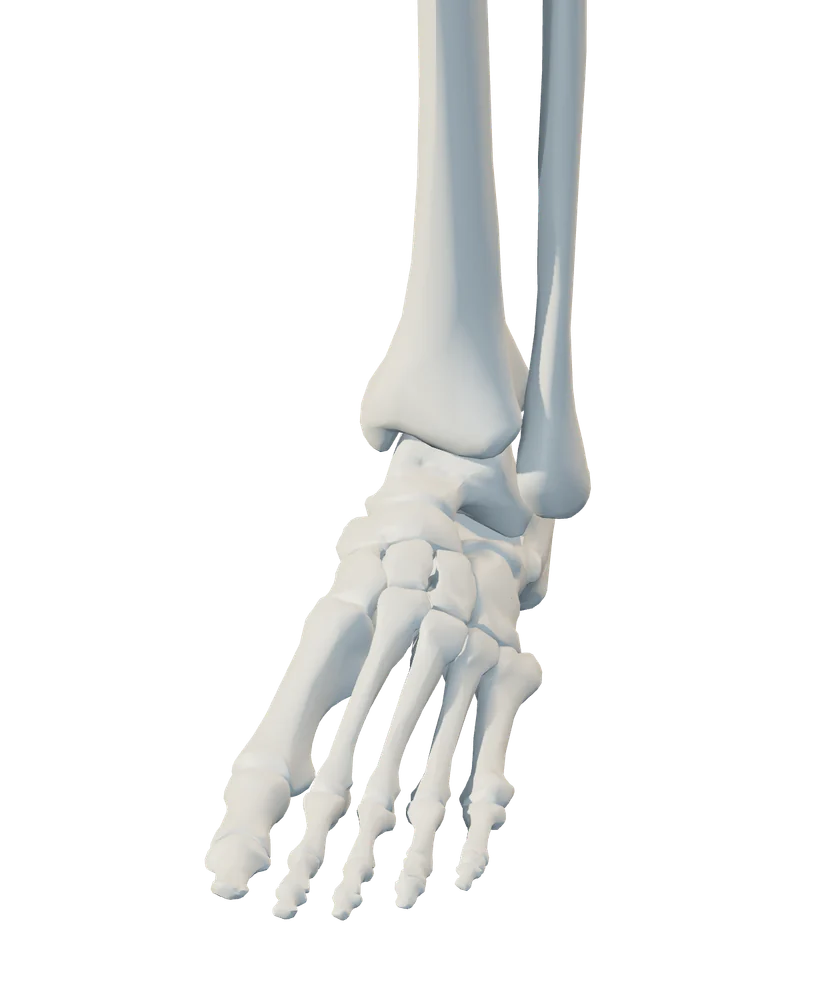
Outside of the ankle
A rolled ankle begins with an injury assessment. An ankle that keeps giving way adds questions about balance and confidence.
An educational guide for either side of the body. Location alone cannot tell us the cause of a symptom.
A useful starting point
What this area can tell you.
The outside ligaments are often involved in an ankle sprain, but a painful ankle after a fall can also be fractured. The mechanism, swelling and ability to bear weight help a clinician decide what needs checking. Once the diagnosis is established, recovery is more than waiting for pain to fade. Walking comfortably, managing uneven ground and returning to sport may require different stages of rehabilitation, with strength and balance considered alongside symptoms.
Notice the pattern
Three questions to bring with you.
You don’t need to work out a diagnosis before a visit. These details can help you describe what you’re experiencing.
- Did the ankle roll or take a direct impact, and could you bear weight immediately afterward?
- Where are swelling and tenderness concentrated, and are they improving?
- Does the ankle give way on uneven ground or during turns, even between painful episodes?
When to get help sooner
Inability to walk after an ankle injury, marked swelling or pain over a bone needs prompt assessment for a possible fracture. Deformity or a cold, numb or discolored foot needs emergency care.
Follow the connection
Possible explanations. Better questions.
These guides explore conditions or patterns that may overlap with this area. They are starting points for a conversation, not a list of diagnoses that can be confirmed from a body map.
Read the result with its limits
How the research fits this area.
The guideline addresses lateral ankle sprains and chronic instability. The trial found fewer recurrent sprains with a home balance program after usual care; neither replaces an initial fracture assessment.
How we select and explain sources ↗Follow the evidence
Research, with context.
Published sources behind the discussion. Read the findings alongside the limits; a study is not a diagnosis or a promise of a result.
Ankle Stability and Movement Coordination Impairments: Lateral Ankle Ligament Sprains Revision
People with lateral ankle sprains or chronic ankle instability.
What it foundThe guideline supports rehabilitation that includes mobility, balance and neuromuscular exercise. Manual therapy can accompany exercise.
What it cannot tell usThe plan depends on the injury and stage of recovery. These recommendations do not apply to fractures or establish that a brace alone resolves chronic instability.
Publication details & citation
Martin et al. Ankle Stability and Movement Coordination Impairments: Lateral Ankle Ligament Sprains Revision. Journal of Orthopaedic & Sports Physical Therapy. 2021. DOI: 10.2519/jospt.2021.0302.
Read the publication recordEffect of unsupervised home based proprioceptive training on recurrences of ankle sprain: randomised controlled trial
522 athletes aged 12–70 with a recent lateral ankle sprain, receiving usual care with or without an eight-week home balance program.
What it foundOver one year, 22% of the training group reported another sprain, compared with 33% of the usual-care group.
What it cannot tell usRecurrences were self-reported. This supports rehabilitation after an ankle sprain; it does not test manipulation or promise immediate pain relief.
Publication details & citation
Hupperets et al. Effect of unsupervised home based proprioceptive training on recurrences of ankle sprain: randomised controlled trial. BMJ. 2009. DOI: 10.1136/bmj.b2684.
Read the publication record
Read our editorial policy for how sources and clinical review are identified.
Your next step
Bring your questions.
We’ll start there.
An assessment can help clarify the pattern, discuss suitable care, and identify when another clinician should be involved.
Anatomy: BodyParts3D, © DBCLS, CC BY 4.0. Model & rendering credits. Return to the full body explorer.