03 / Understand the area
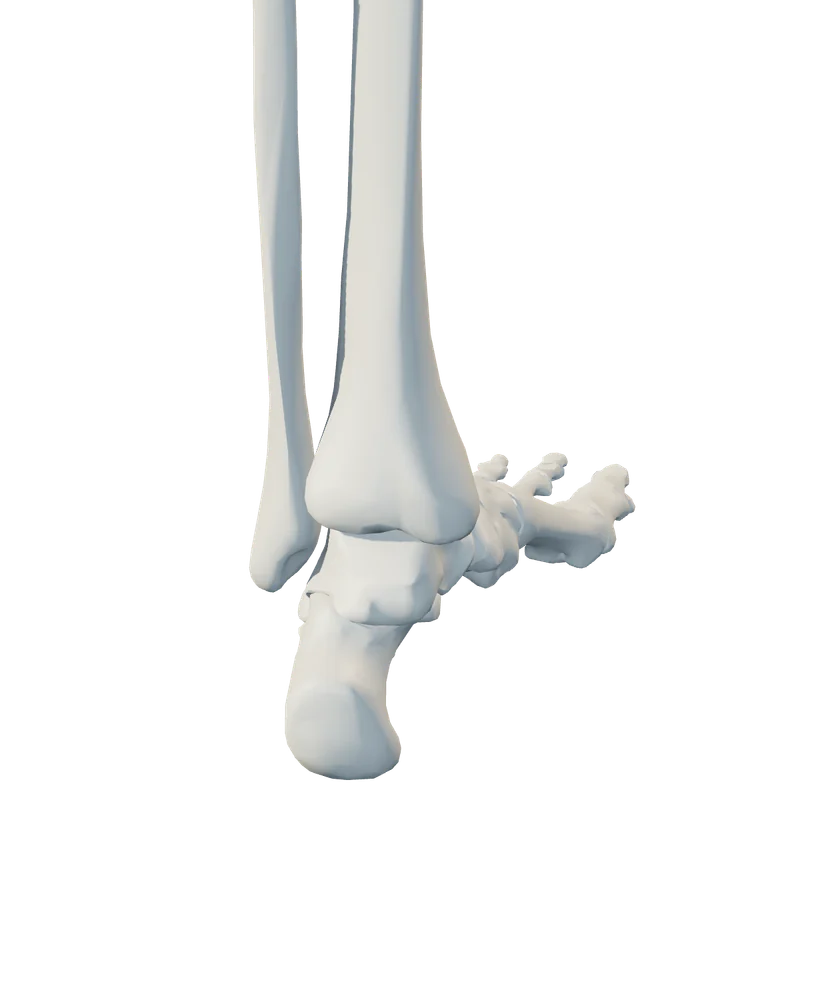
Under & behind the heel
Pain under the heel on the first steps and pain behind the heel near the Achilles tendon can point to different assessments.
An educational guide for either side of the body. Location alone cannot tell us the cause of a symptom.
A useful starting point
What this area can tell you.
Be precise about the spot: the underside of the heel, the back of it or the sides. Plantar heel pain can be especially noticeable when getting up after rest, while other patterns may involve a tendon, an injury or another cause. Note how symptoms change over the day and after changes in walking or running. A clinician should match an exercise or loading plan to the assessed problem rather than prescribing the same stretch for every painful heel.
Notice the pattern
Three questions to bring with you.
You don’t need to work out a diagnosis before a visit. These details can help you describe what you’re experiencing.
- Is the pain underneath the heel or at the back near the Achilles tendon?
- Are the first steps after rest worse, and what happens as walking continues?
- Was there a sudden pop or injury, or a recent change in running, walking or time on your feet?
When to get help sooner
A sudden pop with difficulty walking or pushing off, severe pain after injury or inability to bear weight needs urgent assessment. Foot pain with a wound, redness or swelling needs prompt review, especially with diabetes.
Follow the connection
Possible explanations. Better questions.
These guides explore conditions or patterns that may overlap with this area. They are starting points for a conversation, not a list of diagnoses that can be confirmed from a body map.
Read the result with its limits
How the research fits this area.
The stretching trial involved long-standing plantar fasciitis under the heel. It does not establish treatment for an Achilles rupture, a fracture or every type of heel pain; both groups also received other care.
How we select and explain sources ↗Follow the evidence
Research, with context.
Published sources behind the discussion. Read the findings alongside the limits; a study is not a diagnosis or a promise of a result.
Tissue-specific plantar fascia-stretching exercise enhances outcomes in patients with chronic heel pain. A prospective, randomized study
101 patients with plantar fasciitis lasting at least ten months.
What it foundPlantar fascia-specific stretching improved worst pain and first-step pain more at eight weeks than Achilles stretching.
What it cannot tell usOnly 82 patients returned. Both groups also received insoles, medication and education, so the results cannot be attributed to stretching alone or generalized to every heel problem.
Publication details & citation
DiGiovanni et al. Tissue-specific plantar fascia-stretching exercise enhances outcomes in patients with chronic heel pain. A prospective, randomized study. Journal of Bone and Joint Surgery. 2003. DOI: 10.2106/00004623-200307000-00013.
Read the publication record
Read our editorial policy for how sources and clinical review are identified.
Your next step
Bring your questions.
We’ll start there.
An assessment can help clarify the pattern, discuss suitable care, and identify when another clinician should be involved.
Anatomy: BodyParts3D, © DBCLS, CC BY 4.0. Model & rendering credits. Return to the full body explorer.