The Source / A field guide to feeling better
Hip & SI Joint
“Hip pain” may mean pain in the groin, outside the hip or in the buttock. Those locations open different lines of inquiry.
Can you point to it?
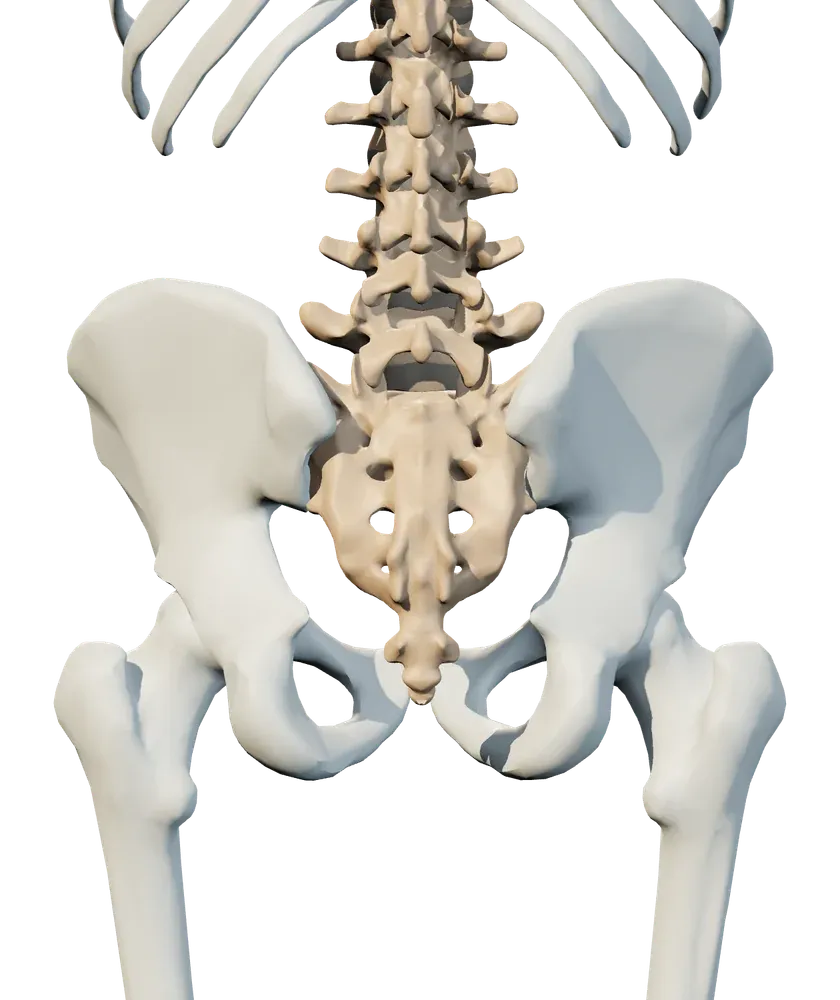
Select a label to explore its side of the body
Choose the closest area.
Select a point on the close-up, or choose below. You’ll find possible explanations, questions to bring to a visit, and the evidence behind the discussion.
Put the symptoms in context
The hip joint, nearby tendons and lower back can produce overlapping symptoms. Sacroiliac pain cannot be established simply from a feeling that the pelvis is out of place.
Follow the question
Explore hip & si joint
These guides describe possibilities, not a diagnosis. Each explains what to ask, where the evidence applies and when another kind of care is needed.
- Condition guide
Hip pain
Groin, outer-hip and buttock pain can point to different structures and different next steps.
Understand this condition - Condition guide
Sciatica
Leg pain related to nerve irritation, what scans can and cannot tell you, and when to seek help.
Understand this condition - Condition guide
Back pain
Common back-pain patterns, warning signs and how to judge progress in everyday life.
Understand this condition
Be specific about “hip”
The hip-pain guide separates groin, outer-hip and buttock symptoms as starting points for an examination. The sciatica guide is useful when symptoms travel into the leg. Neither a diagram nor the feeling that one side is higher can establish the cause.
Describe stairs, walking, sitting and side-lying in your symptom history. Include a recent fall or injury and whether putting weight on the leg has become difficult.
Match the study to the tissue and diagnosis
The hip trial below studied confirmed gluteal tendinopathy. Education and exercise for that condition cannot be presented as proof that an adjustment corrects a pelvis or treats hip arthritis. The hip guide also links to research about assessing possible sacroiliac pain and explains its limits.
Follow the evidence
Research, with context.
Published sources behind the discussion. Read the findings alongside the limits; a study is not a diagnosis or a promise of a result.
Education plus exercise versus corticosteroid injection use versus a wait and see approach on global outcome and pain from gluteal tendinopathy: prospective, single blinded, randomised clinical trial
204 adults aged 35–70 with confirmed gluteal tendinopathy.
What it foundEducation with load management and exercise improved pain and global recovery more at eight weeks. Global improvement remained better than injection at 52 weeks.
What it cannot tell usAt 52 weeks, pain did not significantly differ from the injection group. These results concern gluteal tendinopathy, not all hip pain or hip arthritis.
Publication details & citation
Mellor et al. Education plus exercise versus corticosteroid injection use versus a wait and see approach on global outcome and pain from gluteal tendinopathy: prospective, single blinded, randomised clinical trial. BMJ. 2018. DOI: 10.1136/bmj.k1662.
Read the publication record
Read our editorial policy for how sources and clinical review are identified.