The Source / A field guide to feeling better
Lower Back
Back pain is a location. Sciatica is a symptom pattern. A disc is one structure that may be involved. Knowing the difference helps.
Can you point to it?
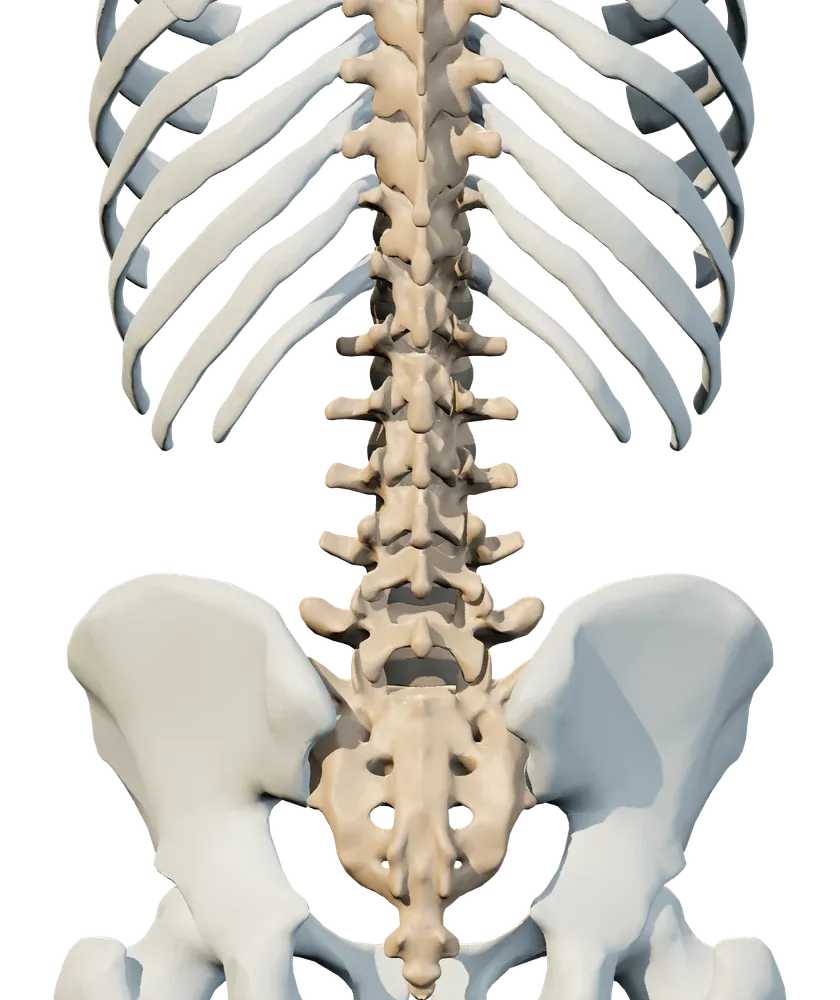
Select a label to explore its side of the body
Choose the closest area.
Select a point on the close-up, or choose below. You’ll find possible explanations, questions to bring to a visit, and the evidence behind the discussion.
Put the symptoms in context
Most decisions begin with symptoms, function and an examination. A scan finding is only one part of the picture: changes can also appear in people without pain.
Follow the question
Explore lower back
These guides describe possibilities, not a diagnosis. Each explains what to ask, where the evidence applies and when another kind of care is needed.
- Condition guide
Back pain
Common back-pain patterns, warning signs and how to judge progress in everyday life.
Understand this condition - Condition guide
Sciatica
Leg pain related to nerve irritation, what scans can and cannot tell you, and when to seek help.
Understand this condition - Condition guide
Disc injury
Disc changes, symptoms and treatment choices without assuming every scan finding explains pain.
Understand this condition
Three terms, different meanings
Back pain describes where symptoms are felt. Sciatica describes a pattern of leg symptoms associated with nerve irritation. A disc injury concerns a structure that may or may not explain those symptoms. You can move between the guides without treating the terms as interchangeable.
Start with the back-pain guide's urgent warning signs before considering routine care. For an appointment, record how far you can walk, whether pain travels and which activities have changed.
Put a scan in context
The imaging review below found degenerative changes in many people without pain. This makes symptoms and examination findings essential to interpretation. It does not mean imaging is never useful or that progressive neurological symptoms should wait. The condition guides explain how the next step can differ.
Follow the evidence
Research, with context.
Published sources behind the discussion. Read the findings alongside the limits; a study is not a diagnosis or a promise of a result.
Noninvasive Treatments for Acute, Subacute, and Chronic Low Back Pain: A Clinical Practice Guideline From the American College of Physicians
Adults with acute, subacute or chronic low-back pain considering noninvasive management.
What it foundThe guideline prioritizes non-drug options for chronic low-back pain, including exercise. Spinal manipulation is one of several options, supported by lower-quality evidence.
What it cannot tell usA guideline synthesizes evidence rather than reporting a new experiment. It does not establish disc realignment, a universal cure or superiority over all other care.
Publication details & citation
Qaseem et al. Noninvasive Treatments for Acute, Subacute, and Chronic Low Back Pain: A Clinical Practice Guideline From the American College of Physicians. Annals of Internal Medicine. 2017. DOI: 10.7326/M16-2367.
Read the publication recordSystematic literature review of imaging features of spinal degeneration in asymptomatic populations
33 studies reporting imaging findings in 3,110 people without symptoms.
What it foundDegenerative findings were common in people without pain and became more frequent with age. A scan needs interpretation alongside symptoms and examination findings.
What it cannot tell usThis does not mean every disc finding is harmless or that imaging is never needed. It cannot identify the cause of an individual patient’s pain.
Publication details & citation
Brinjikji et al. Systematic literature review of imaging features of spinal degeneration in asymptomatic populations. American Journal of Neuroradiology. 2015. DOI: 10.3174/ajnr.A4173.
Read the publication record
Read our editorial policy for how sources and clinical review are identified.