The Source / A field guide to feeling better
Head & Jaw
A headache, a spinning sensation and an aching jaw can share a neighborhood without sharing a cause.
Can you point to it?
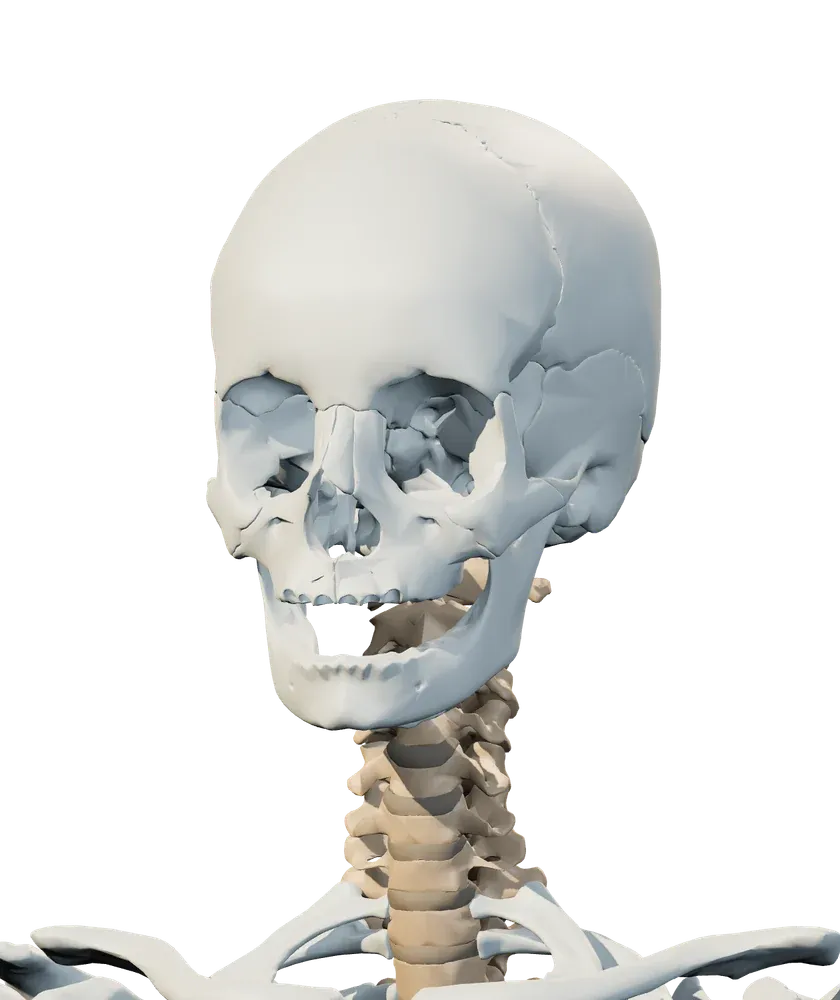
Select a label to explore its side of the body
Choose the closest area.
Select a point on the close-up, or choose below. You’ll find possible explanations, questions to bring to a visit, and the evidence behind the discussion.
Put the symptoms in context
Start with the pattern: when symptoms began, how long they last, what brings them on and whether vision, balance or chewing has changed. A guide can help you prepare questions; an examination determines which questions matter for you.
Follow the question
Explore head & jaw
These guides describe possibilities, not a diagnosis. Each explains what to ask, where the evidence applies and when another kind of care is needed.
- Condition guide
Headaches & migraines
Different headache patterns, what an assessment can clarify, and symptoms that need urgent care.
Understand this condition - Condition guide
Jaw pain & TMD
Jaw muscles, joint discomfort and the role of movement, dental assessment and self-management.
Understand this condition - Condition guide
Vertigo
Why spinning has several causes, and why the diagnosis comes before a neck treatment.
Understand this condition
Choose the question before the treatment
If your main concern is pain with chewing, start with jaw pain and TMD. If it is an episode of spinning, read vertigo before assuming that the neck is responsible. The headache guide separates neck-related headaches from other patterns and includes urgent warning signs.
A useful symptom record includes timing, duration, associated symptoms and the activities you stopped doing. For a jaw problem, add any recent dental work or injury and whether the jaw locks.
Read the evidence by diagnosis
The TMD review below concerns persistent jaw-related pain. It cannot establish a treatment for migraine or unexplained dizziness. Follow each condition card for research matched to that question. Dental, medical and musculoskeletal assessments answer different questions; more than one may be appropriate.
Follow the evidence
Research, with context.
Published sources behind the discussion. Read the findings alongside the limits; a study is not a diagnosis or a promise of a result.
Management of chronic pain secondary to temporomandibular disorders: a systematic review and network meta-analysis of randomised trials
153 trials involving 8,713 participants contributed to the network analyses of chronic TMD pain.
What it foundAmong comparisons with more certain evidence, approaches supporting movement and coping improved pain. These included selected supervised exercises, mobilization and psychological approaches.
What it cannot tell usCertainty varied by treatment and outcome. Evidence about adverse events was low or very low certainty. This is not evidence for treating every headache or acute jaw injury.
Publication details & citation
Yao et al. Management of chronic pain secondary to temporomandibular disorders: a systematic review and network meta-analysis of randomised trials. BMJ. 2023. DOI: 10.1136/bmj-2023-076226.
Read the publication record
Read our editorial policy for how sources and clinical review are identified.