03 / Understand the area
Jaw joint & chewing muscles
Chewing, yawning and talking can make jaw discomfort hard to ignore. The joint, muscles and teeth all deserve consideration.
An educational guide for either side of the body. Location alone cannot tell us the cause of a symptom.
A useful starting point
What this area can tell you.
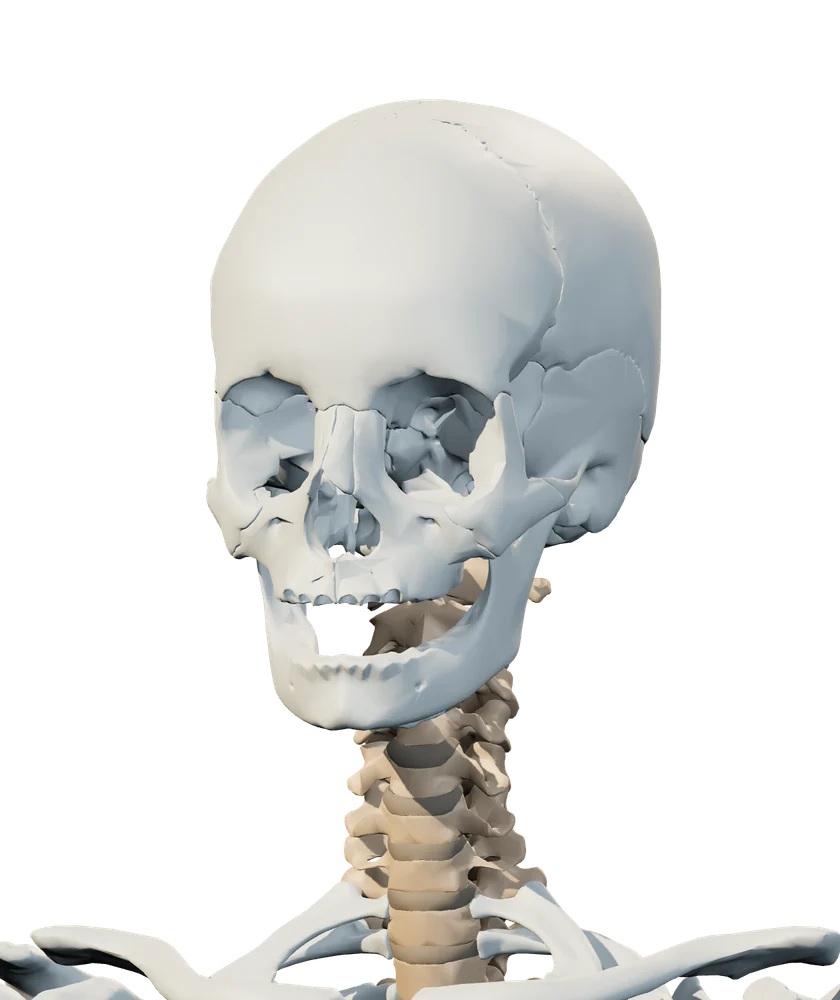
The jaw joint sits just in front of the ear. Pain there can overlap with soreness in the cheek or temple, while a painful tooth may need a dentist. Clicking by itself does not explain the cause or establish a need for treatment. More useful details include whether your mouth catches or locks, whether opening has become limited and which foods have become difficult to chew. An assessment should consider dental causes as well as jaw movement and muscle symptoms.
Notice the pattern
Three questions to bring with you.
You don’t need to work out a diagnosis before a visit. These details can help you describe what you’re experiencing.
- Is the discomfort in front of the ear, in the chewing muscles or around a particular tooth?
- Does the jaw catch or lock, and has comfortable mouth opening changed?
- Which activities bring it on: chewing, yawning, waking up or long conversations?
When to get help sooner
Facial swelling with fever needs urgent dental or medical care. Trouble breathing or swallowing, or jaw pain with chest pressure, sweating or breathlessness, needs emergency care.
Follow the connection
Possible explanations. Better questions.
These guides explore conditions or patterns that may overlap with this area. They are starting points for a conversation, not a list of diagnoses that can be confirmed from a body map.
Read the result with its limits
How the research fits this area.
The chronic TMD review supports selected movement, coping and conservative care approaches, with varying certainty. Its findings do not cover a dental infection, fracture or acutely locked jaw.
How we select and explain sources ↗Follow the evidence
Research, with context.
Published sources behind the discussion. Read the findings alongside the limits; a study is not a diagnosis or a promise of a result.
Management of chronic pain secondary to temporomandibular disorders: a systematic review and network meta-analysis of randomised trials
153 trials involving 8,713 participants contributed to the network analyses of chronic TMD pain.
What it foundAmong comparisons with more certain evidence, approaches supporting movement and coping improved pain. These included selected supervised exercises, mobilization and psychological approaches.
What it cannot tell usCertainty varied by treatment and outcome. Evidence about adverse events was low or very low certainty. This is not evidence for treating every headache or acute jaw injury.
Publication details & citation
Yao et al. Management of chronic pain secondary to temporomandibular disorders: a systematic review and network meta-analysis of randomised trials. BMJ. 2023. DOI: 10.1136/bmj-2023-076226.
Read the publication record
Read our editorial policy for how sources and clinical review are identified.
Your next step
Bring your questions.
We’ll start there.
An assessment can help clarify the pattern, discuss suitable care, and identify when another clinician should be involved.
Anatomy: BodyParts3D, © DBCLS, CC BY 4.0. Model & rendering credits. Return to the full body explorer.