03 / Understand the area
Ribs & side of the chest
Pain around a rib can feel mechanical, but breathing symptoms and chest discomfort must be considered before choosing musculoskeletal care.
An educational guide for either side of the body. Location alone cannot tell us the cause of a symptom.
A useful starting point
What this area can tell you.
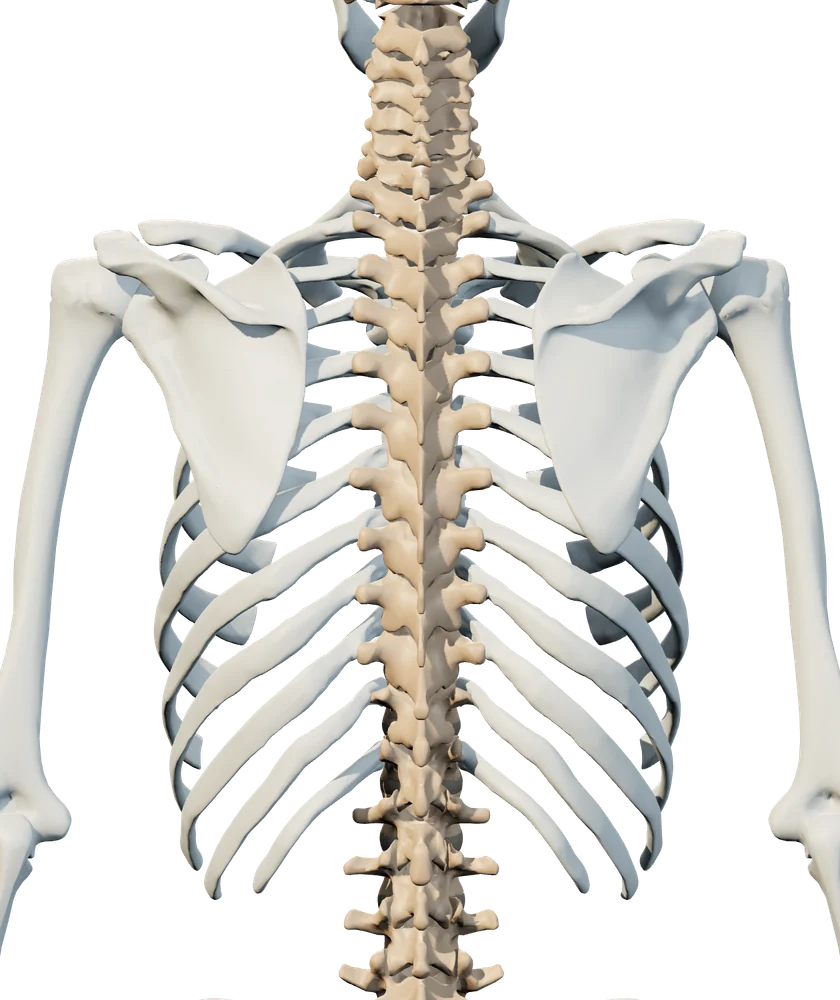
The ribs move with breathing and connect to the mid-back. A bruise or muscle strain may be one explanation after a clear injury, but pain here can also arise from the chest or another medical problem. Tenderness or a change with movement does not rule those causes out. Tell a clinician about a cough, fever, rash, breathlessness or recent trauma. The first useful outcome may be deciding where you should be assessed, rather than choosing a manual treatment.
Notice the pattern
Three questions to bring with you.
You don’t need to work out a diagnosis before a visit. These details can help you describe what you’re experiencing.
- Was there a blow, fall or bout of coughing before the pain started?
- Does normal breathing change the discomfort, and are you short of breath?
- Is there a new rash, fever, cough or pain extending into the chest or abdomen?
When to get help sooner
Chest or rib pain with breathlessness, chest pressure, coughing blood or faintness needs emergency care. Worsening pain after chest trauma or pain with fever requires urgent medical assessment.
Follow the connection
Possible explanations. Better questions.
These guides explore conditions or patterns that may overlap with this area. They are starting points for a conversation, not a list of diagnoses that can be confirmed from a body map.
Read the result with its limits
How the research fits this area.
The linked review is about informed choices, not evidence that chiropractic treats rib or chest pain. A medical cause must be considered before discussing musculoskeletal treatment options.
How we select and explain sources ↗Follow the evidence
Research, with context.
Published sources behind the discussion. Read the findings alongside the limits; a study is not a diagnosis or a promise of a result.
Decision aids for people facing health treatment or screening decisions
209 studies of decision aids across a range of treatment and screening choices.
What it foundDecision aids improved knowledge and understanding of risks and helped people make choices that reflected their informed values.
What it cannot tell usMost decisions were outside chiropractic care. This supports making options and trade-offs explicit; it does not rank clinics, verify credentials or prove the effectiveness of a particular treatment.
Publication details & citation
Stacey et al. Decision aids for people facing health treatment or screening decisions. Cochrane Database of Systematic Reviews. 2024. DOI: 10.1002/14651858.CD001431.pub6.
Read the publication record
Read our editorial policy for how sources and clinical review are identified.
Your next step
Bring your questions.
We’ll start there.
An assessment can help clarify the pattern, discuss suitable care, and identify when another clinician should be involved.
Anatomy: BodyParts3D, © DBCLS, CC BY 4.0. Model & rendering credits. Return to the full body explorer.