03 / Understand the area
Middle of the spine
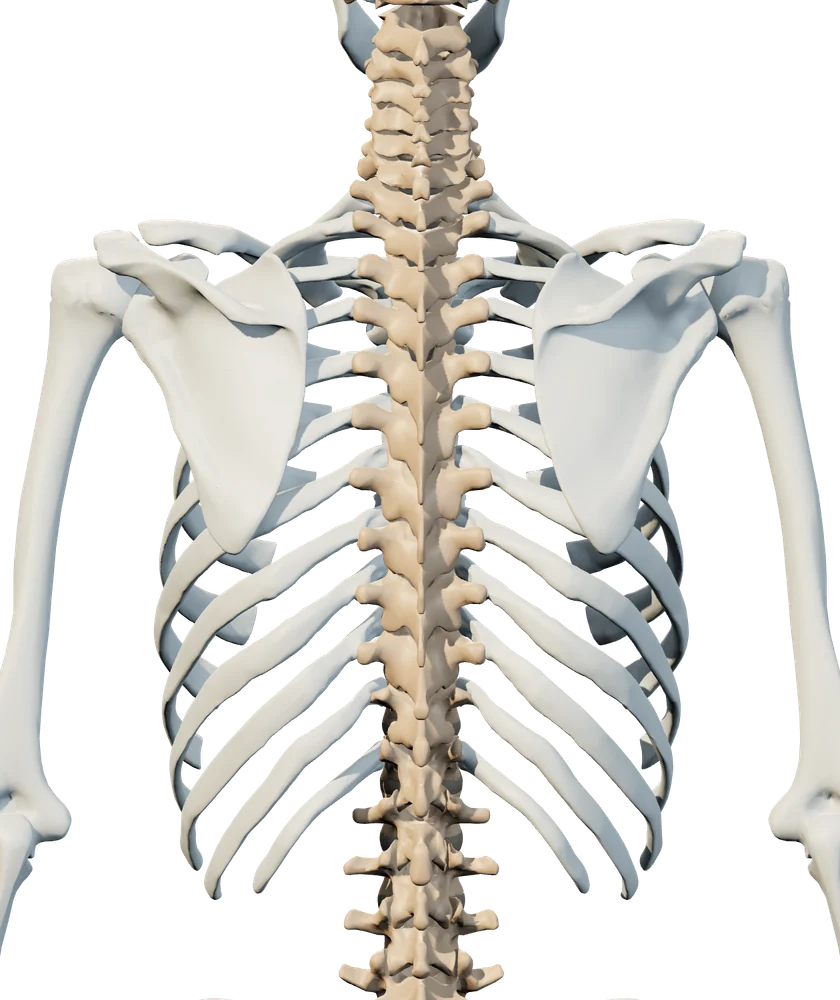
Pain over the middle of the spine needs a history that includes injury, bone health and changes beyond the back itself.
An educational guide for either side of the body. Location alone cannot tell us the cause of a symptom.
A useful starting point
What this area can tell you.
Central thoracic pain should not automatically be described as a joint being out of place. A clinician needs to know about recent falls, osteoporosis, steroid medicines and symptoms such as fever or unexplained weight loss. If spinal curvature is already known, bring that history, but do not assume it explains new pain. The examination and history guide whether investigation is needed and which care options are reasonable. Tracking walking, sleep and comfortable everyday movement can help judge progress.
Notice the pattern
Three questions to bring with you.
You don’t need to work out a diagnosis before a visit. These details can help you describe what you’re experiencing.
- Did the pain follow a fall or lift, and have you been told you have fragile bones?
- Is it one focal spot over the spine or a broader area beside it?
- Has sleep, walking or general health changed, including fever or unexplained weight loss?
When to get help sooner
Severe mid-back pain after injury, particularly with osteoporosis, needs urgent assessment. New leg weakness, difficulty walking or bladder or bowel changes needs emergency care.
Follow the connection
Possible explanations. Better questions.
These guides explore conditions or patterns that may overlap with this area. They are starting points for a conversation, not a list of diagnoses that can be confirmed from a body map.
Read the result with its limits
How the research fits this area.
Decision-aid research concerns informed treatment choices, not a treatment for thoracic pain. Ask what supports the proposed diagnosis and whether imaging would change the plan before choosing care.
How we select and explain sources ↗Follow the evidence
Research, with context.
Published sources behind the discussion. Read the findings alongside the limits; a study is not a diagnosis or a promise of a result.
Decision aids for people facing health treatment or screening decisions
209 studies of decision aids across a range of treatment and screening choices.
What it foundDecision aids improved knowledge and understanding of risks and helped people make choices that reflected their informed values.
What it cannot tell usMost decisions were outside chiropractic care. This supports making options and trade-offs explicit; it does not rank clinics, verify credentials or prove the effectiveness of a particular treatment.
Publication details & citation
Stacey et al. Decision aids for people facing health treatment or screening decisions. Cochrane Database of Systematic Reviews. 2024. DOI: 10.1002/14651858.CD001431.pub6.
Read the publication record
Read our editorial policy for how sources and clinical review are identified.
Your next step
Bring your questions.
We’ll start there.
An assessment can help clarify the pattern, discuss suitable care, and identify when another clinician should be involved.
Anatomy: BodyParts3D, © DBCLS, CC BY 4.0. Model & rendering credits. Return to the full body explorer.