03 / Understand the area
Between the shoulder blades
A broad ache between the shoulder blades is often described as tension, but that word does not explain why it is happening.
An educational guide for either side of the body. Location alone cannot tell us the cause of a symptom.
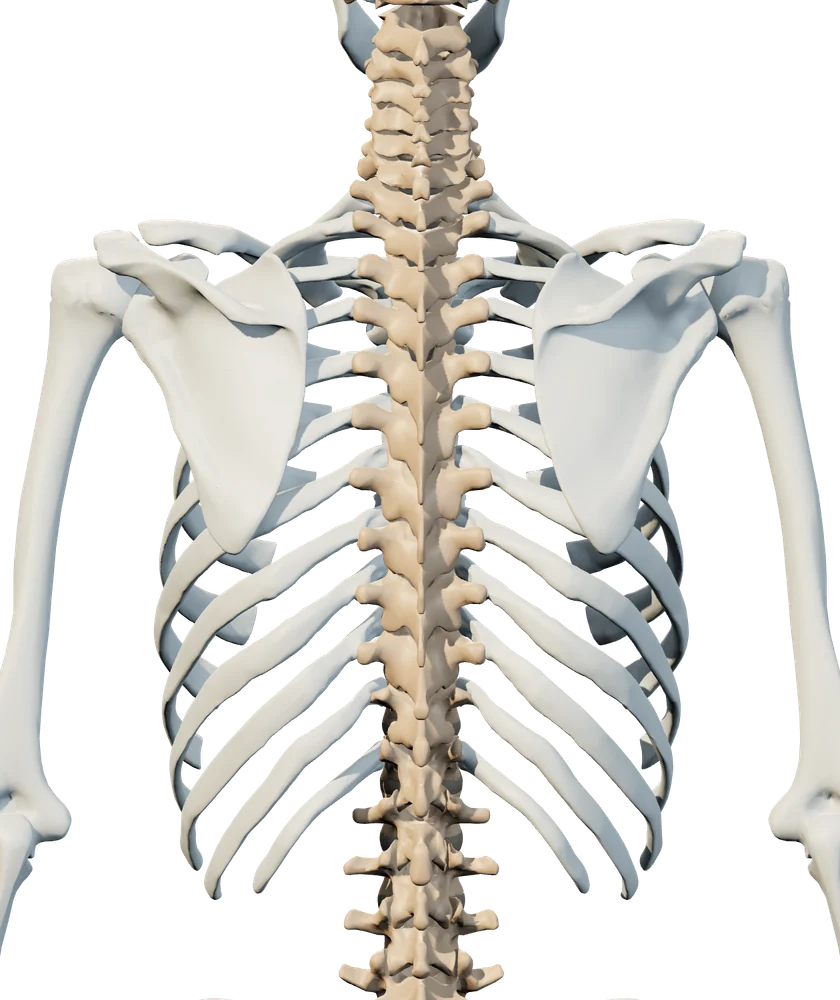
A useful starting point
What this area can tell you.
Note whether the pain changes when you move your arms, turn your head or take a break from a sustained task. An examination may consider the upper back, neck and shoulders, alongside injury and general health. Pain with breathing, symptoms in the chest or pain that remains intense at rest needs a different level of attention. A useful care discussion should name the working diagnosis, explain any uncertainty and agree on a meaningful activity to track.
Notice the pattern
Three questions to bring with you.
You don’t need to work out a diagnosis before a visit. These details can help you describe what you’re experiencing.
- Does changing tasks or moving the arms alter the pain, or does it remain constant?
- Is the ache spread between both blades or concentrated on one side?
- Are breathing, chest symptoms, fever or an injury part of the same episode?
When to get help sooner
Sudden severe upper-back pain, or upper-back pain with chest pressure, breathlessness, fainting or sweating, needs emergency assessment. Persistent unexplained pain at rest or fever warrants medical review.
Follow the connection
Possible explanations. Better questions.
These guides explore conditions or patterns that may overlap with this area. They are starting points for a conversation, not a list of diagnoses that can be confirmed from a body map.
Back pain
Common back-pain patterns, warning signs and how to judge progress in everyday life.
Read the guide Condition guideNeck pain
Stiffness, referred pain and nerve symptoms: understand the questions an examination should answer.
Read the guide Condition guideWork-related pain
How job demands, an injury history and a practical return-to-activity plan fit together.
Read the guideRead the result with its limits
How the research fits this area.
The decision-aid review supports discussing options, benefits and harms. It is not a trial of treatment for pain between the shoulder blades; low-back treatment findings should not be substituted for thoracic evidence.
How we select and explain sources ↗Follow the evidence
Research, with context.
Published sources behind the discussion. Read the findings alongside the limits; a study is not a diagnosis or a promise of a result.
Decision aids for people facing health treatment or screening decisions
209 studies of decision aids across a range of treatment and screening choices.
What it foundDecision aids improved knowledge and understanding of risks and helped people make choices that reflected their informed values.
What it cannot tell usMost decisions were outside chiropractic care. This supports making options and trade-offs explicit; it does not rank clinics, verify credentials or prove the effectiveness of a particular treatment.
Publication details & citation
Stacey et al. Decision aids for people facing health treatment or screening decisions. Cochrane Database of Systematic Reviews. 2024. DOI: 10.1002/14651858.CD001431.pub6.
Read the publication record
Read our editorial policy for how sources and clinical review are identified.
Your next step
Bring your questions.
We’ll start there.
An assessment can help clarify the pattern, discuss suitable care, and identify when another clinician should be involved.
Anatomy: BodyParts3D, © DBCLS, CC BY 4.0. Model & rendering credits. Return to the full body explorer.