The Source / A field guide to feeling better
Shoulder
Reaching overhead, fastening a seat belt or sleeping on your side can reveal a shoulder problem before you know its name.
Can you point to it?
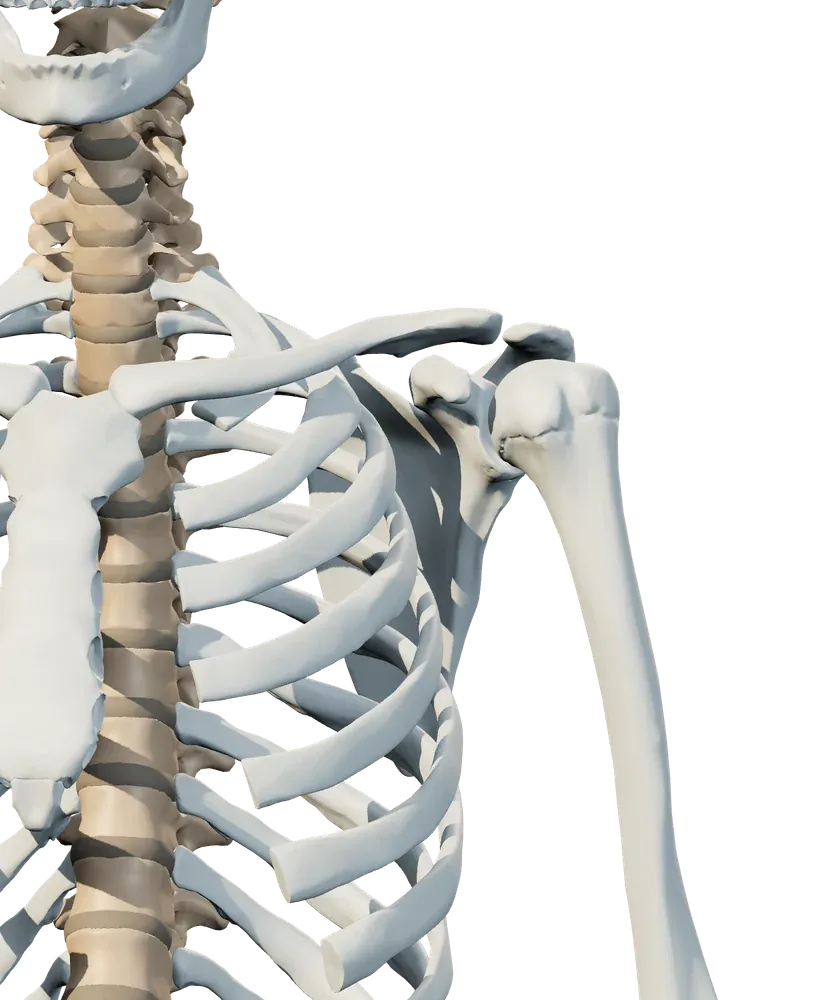
Select a label to explore its side of the body
Choose the closest area.
Select a point on the close-up, or choose below. You’ll find possible explanations, questions to bring to a visit, and the evidence behind the discussion.
Put the symptoms in context
Shoulder pain can involve a tendon, joint or another structure, and sometimes comes from the neck. How symptoms began and which movements are limited help guide an assessment.
Follow the question
Explore shoulder
These guides describe possibilities, not a diagnosis. Each explains what to ask, where the evidence applies and when another kind of care is needed.
- Condition guide
Shoulder pain
Reaching, lifting and sleeping on your side: learn about common shoulder-pain patterns.
Understand this condition - Condition guide
Neck pain
Stiffness, referred pain and nerve symptoms: understand the questions an examination should answer.
Understand this condition - Condition guide
Work-related pain
How job demands, an injury history and a practical return-to-activity plan fit together.
Understand this condition
Start with the movement you miss
A painful overhead reach, difficulty sleeping on one side and loss of movement after an injury deserve a clear history. Start with shoulder pain for common patterns and warning signs. If symptoms travel from the neck into the hand, also read neck pain.
For an assessment, choose one or two tasks that matter: reaching a shelf, putting on a coat or returning to training. Describe any sudden injury and what changed immediately afterward.
More appointments need a reason
The GRASP trial below compared a series of supervised exercise visits with a single advice session that included home exercise. Its results make a useful consultation question: what extra benefit is each proposed visit expected to add? The findings concern rotator cuff disorders, not every cause of shoulder pain.
Follow the evidence
Research, with context.
Published sources behind the discussion. Read the findings alongside the limits; a study is not a diagnosis or a promise of a result.
Progressive exercise compared with best practice advice, with or without corticosteroid injection, for the treatment of patients with rotator cuff disorders (GRASP): a multicentre, pragmatic, 2 × 2 factorial, randomised controlled trial
708 adults with a new episode of a rotator cuff disorder.
What it foundMore supervised exercise sessions did not improve the primary outcome over 12 months compared with a best-practice advice session. Injection offered no long-term benefit.
What it cannot tell usAdvice included home exercise and self-management. Major trauma and several other shoulder diagnoses were excluded; this is not a comparison of all shoulder treatments.
Publication details & citation
Hopewell et al. Progressive exercise compared with best practice advice, with or without corticosteroid injection, for the treatment of patients with rotator cuff disorders (GRASP): a multicentre, pragmatic, 2 × 2 factorial, randomised controlled trial. The Lancet. 2021. DOI: 10.1016/S0140-6736(21)00846-1.
Read the publication record
Read our editorial policy for how sources and clinical review are identified.