03 / Understand the area
Front of the shoulder
Reaching behind your back or lifting something in front of you can make the front of the shoulder feel vulnerable.
An educational guide for either side of the body. Location alone cannot tell us the cause of a symptom.
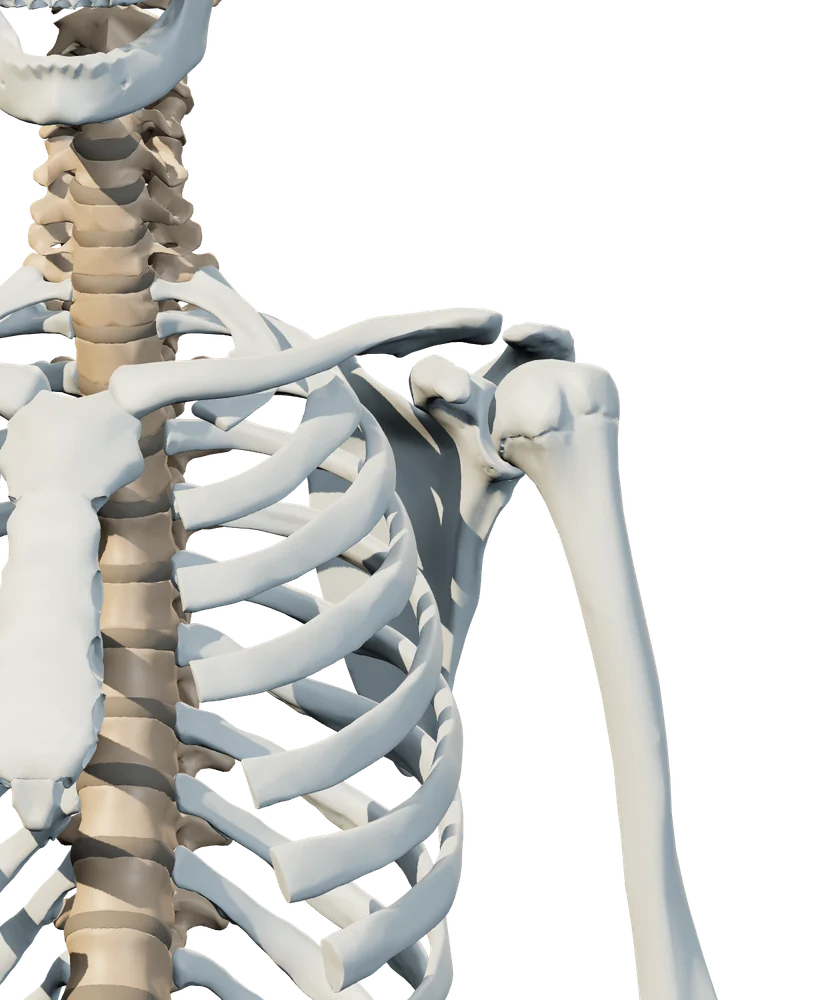
A useful starting point
What this area can tell you.
Several structures share this small area, including tendons and the shoulder joint. Location alone cannot distinguish a tendon problem from joint stiffness or pain referred from elsewhere. What changed first can help: pain during a particular activity, a gradual loss of movement or sudden weakness after an injury. Describe the task you can no longer do comfortably rather than trying to identify a damaged structure from an online test.
Notice the pattern
Three questions to bring with you.
You don’t need to work out a diagnosis before a visit. These details can help you describe what you’re experiencing.
- Which task is hardest: reaching behind your back, lifting forward or carrying an object?
- Does movement stop because of pain, stiffness or a feeling that the arm lacks strength?
- Was there a fall, a sudden pull or a gradual increase in work or sport demands?
When to get help sooner
Shoulder or arm pain with chest pressure, sweating or breathlessness needs emergency care. A changed shoulder shape or inability to use the arm after an injury needs urgent assessment.
Follow the connection
Possible explanations. Better questions.
These guides explore conditions or patterns that may overlap with this area. They are starting points for a conversation, not a list of diagnoses that can be confirmed from a body map.
Read the result with its limits
How the research fits this area.
GRASP studied rotator cuff disorders and excluded major trauma and several other shoulder diagnoses. Its exercise and advice findings cannot be assumed to apply to every source of front-shoulder pain.
How we select and explain sources ↗Follow the evidence
Research, with context.
Published sources behind the discussion. Read the findings alongside the limits; a study is not a diagnosis or a promise of a result.
Progressive exercise compared with best practice advice, with or without corticosteroid injection, for the treatment of patients with rotator cuff disorders (GRASP): a multicentre, pragmatic, 2 × 2 factorial, randomised controlled trial
708 adults with a new episode of a rotator cuff disorder.
What it foundMore supervised exercise sessions did not improve the primary outcome over 12 months compared with a best-practice advice session. Injection offered no long-term benefit.
What it cannot tell usAdvice included home exercise and self-management. Major trauma and several other shoulder diagnoses were excluded; this is not a comparison of all shoulder treatments.
Publication details & citation
Hopewell et al. Progressive exercise compared with best practice advice, with or without corticosteroid injection, for the treatment of patients with rotator cuff disorders (GRASP): a multicentre, pragmatic, 2 × 2 factorial, randomised controlled trial. The Lancet. 2021. DOI: 10.1016/S0140-6736(21)00846-1.
Read the publication record
Read our editorial policy for how sources and clinical review are identified.
Your next step
Bring your questions.
We’ll start there.
An assessment can help clarify the pattern, discuss suitable care, and identify when another clinician should be involved.
Anatomy: BodyParts3D, © DBCLS, CC BY 4.0. Model & rendering credits. Return to the full body explorer.