03 / Understand the area
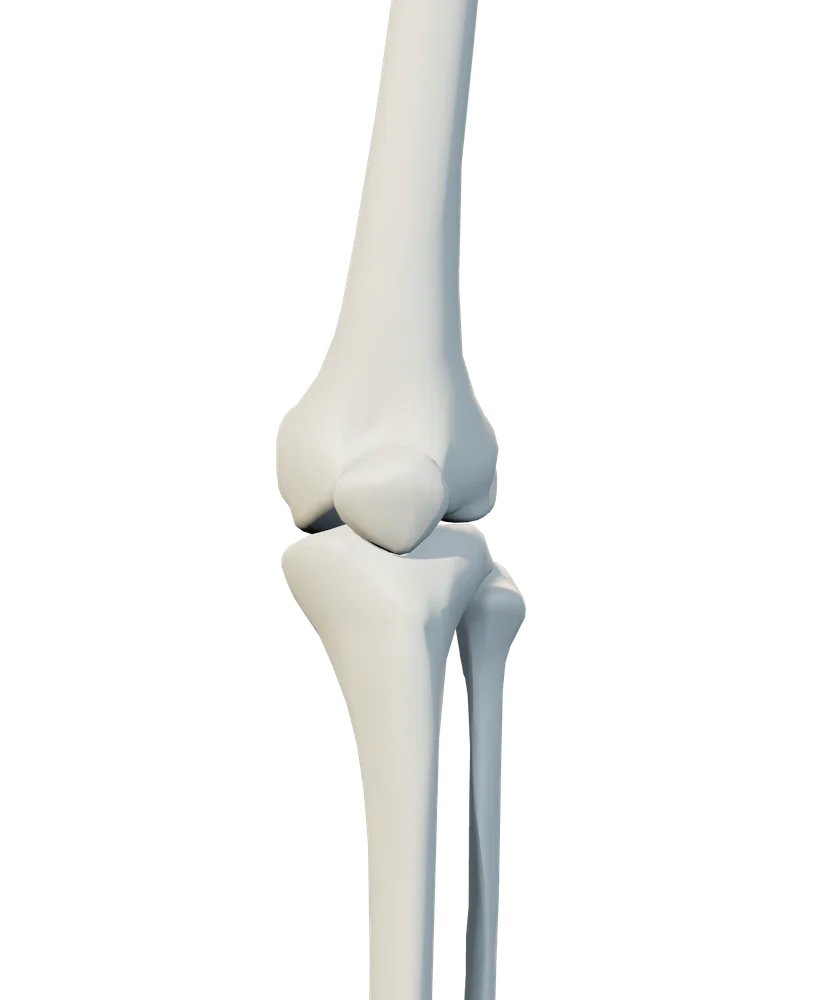
Front of the knee & kneecap
Stairs, squatting and getting up from a chair can make front-of-knee pain especially noticeable in everyday life.
An educational guide for either side of the body. Location alone cannot tell us the cause of a symptom.
A useful starting point
What this area can tell you.
Pain around the kneecap can involve several structures and should not automatically be labeled arthritis or a tracking problem. A clinician considers whether symptoms followed an injury, whether swelling is present and which activities have changed. Explain whether the pain feels around the kneecap or directly below it, and whether the knee feels stuck or simply painful to move. The diagnosis should guide the plan and the choice of meaningful progress measures.
Notice the pattern
Three questions to bring with you.
You don’t need to work out a diagnosis before a visit. These details can help you describe what you’re experiencing.
- Is the pain around the kneecap, directly below it or deeper inside the knee?
- Which matters most: stairs, sitting with the knee bent, squatting or rising from a chair?
- Is there swelling, a recent injury or difficulty fully straightening the knee?
When to get help sooner
A hot, swollen knee with fever, inability to bear weight after injury or inability to straighten the knee needs urgent assessment. An obvious deformity after injury needs emergency care.
Follow the connection
Possible explanations. Better questions.
These guides explore conditions or patterns that may overlap with this area. They are starting points for a conversation, not a list of diagnoses that can be confirmed from a body map.
Read the result with its limits
How the research fits this area.
The linked trial favors physical therapy over steroid injection at one year for knee osteoarthritis. It did not study every cause of kneecap pain, patellar tendon injury or patellofemoral pain.
How we select and explain sources ↗Follow the evidence
Research, with context.
Published sources behind the discussion. Read the findings alongside the limits; a study is not a diagnosis or a promise of a result.
Physical Therapy versus Glucocorticoid Injection for Osteoarthritis of the Knee
156 patients with knee osteoarthritis in the US military health system.
What it foundPatients assigned physical therapy had less pain and disability at one year than those assigned glucocorticoid injection.
What it cannot tell usThis was a physical-therapy trial in a particular setting. It does not establish cartilage regeneration or validate every treatment offered for knee pain.
Publication details & citation
Deyle et al. Physical Therapy versus Glucocorticoid Injection for Osteoarthritis of the Knee. New England Journal of Medicine. 2020. DOI: 10.1056/NEJMoa1905877.
Read the publication record
Read our editorial policy for how sources and clinical review are identified.
Your next step
Bring your questions.
We’ll start there.
An assessment can help clarify the pattern, discuss suitable care, and identify when another clinician should be involved.
Anatomy: BodyParts3D, © DBCLS, CC BY 4.0. Model & rendering credits. Return to the full body explorer.