03 / Understand the area
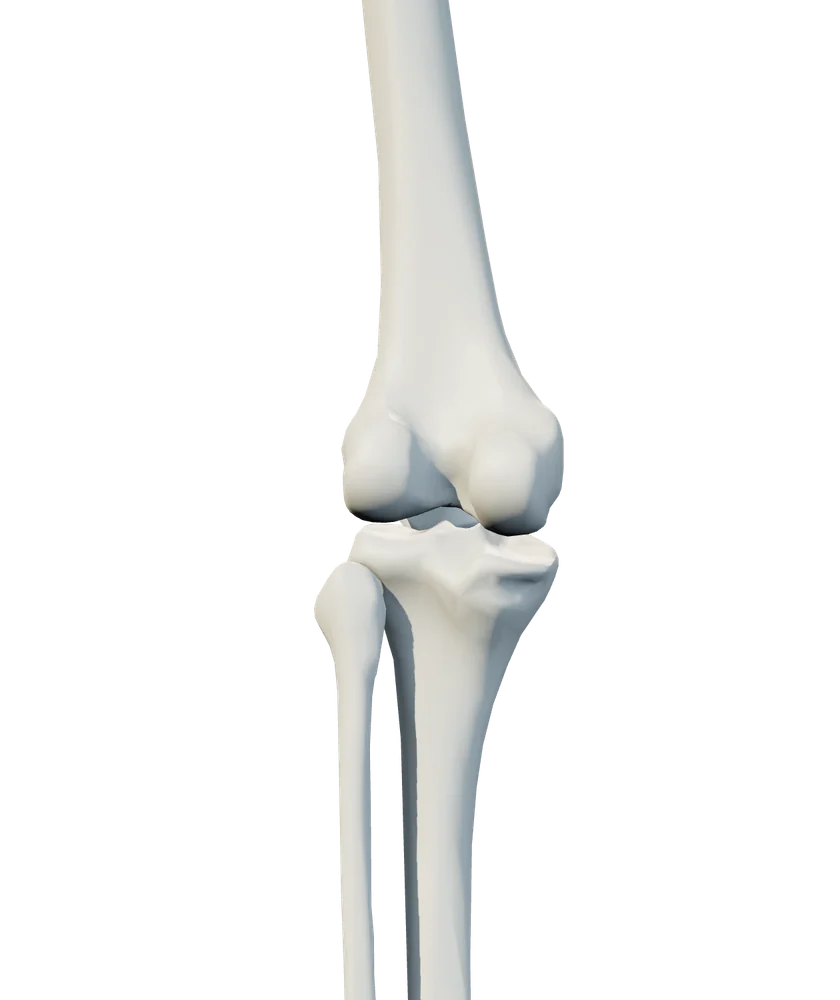
Behind the knee
A tight feeling behind the knee and a swollen calf should not be treated as the same problem without an assessment.
An educational guide for either side of the body. Location alone cannot tell us the cause of a symptom.
A useful starting point
What this area can tell you.
Symptoms behind the knee can accompany a joint problem, a fluid-filled swelling or nearby tendon irritation. A new swollen or painful calf also raises a circulation question that needs medical attention. Note whether there is visible fullness, whether bending or straightening is limited and whether swelling extends down the leg. An examination should establish the likely source before exercises or manual treatment are chosen. Do not assume that a lump is harmless because it is near a sore knee.
Notice the pattern
Three questions to bring with you.
You don’t need to work out a diagnosis before a visit. These details can help you describe what you’re experiencing.
- Is there a visible or palpable fullness behind the knee, and when did it appear?
- Does bending or straightening feel restricted, or is the main symptom calf pain?
- Is one calf more swollen, warm or discolored than the other?
When to get help sooner
New one-sided calf pain or swelling needs urgent medical assessment for a possible blood clot. If accompanied by chest pain, breathlessness or fainting, seek emergency care immediately.
Follow the connection
Possible explanations. Better questions.
These guides explore conditions or patterns that may overlap with this area. They are starting points for a conversation, not a list of diagnoses that can be confirmed from a body map.
Read the result with its limits
How the research fits this area.
Knee osteoarthritis research may inform care after that diagnosis is established. It does not evaluate a new swelling behind the knee or exclude a blood clot, and it must not delay medical assessment.
How we select and explain sources ↗Follow the evidence
Research, with context.
Published sources behind the discussion. Read the findings alongside the limits; a study is not a diagnosis or a promise of a result.
Physical Therapy versus Glucocorticoid Injection for Osteoarthritis of the Knee
156 patients with knee osteoarthritis in the US military health system.
What it foundPatients assigned physical therapy had less pain and disability at one year than those assigned glucocorticoid injection.
What it cannot tell usThis was a physical-therapy trial in a particular setting. It does not establish cartilage regeneration or validate every treatment offered for knee pain.
Publication details & citation
Deyle et al. Physical Therapy versus Glucocorticoid Injection for Osteoarthritis of the Knee. New England Journal of Medicine. 2020. DOI: 10.1056/NEJMoa1905877.
Read the publication record
Read our editorial policy for how sources and clinical review are identified.
Your next step
Bring your questions.
We’ll start there.
An assessment can help clarify the pattern, discuss suitable care, and identify when another clinician should be involved.
Anatomy: BodyParts3D, © DBCLS, CC BY 4.0. Model & rendering credits. Return to the full body explorer.