03 / Understand the area
Inside of the knee
The inner knee may hurt after a twist or become uncomfortable gradually. Those are different starting points for an assessment.
An educational guide for either side of the body. Location alone cannot tell us the cause of a symptom.
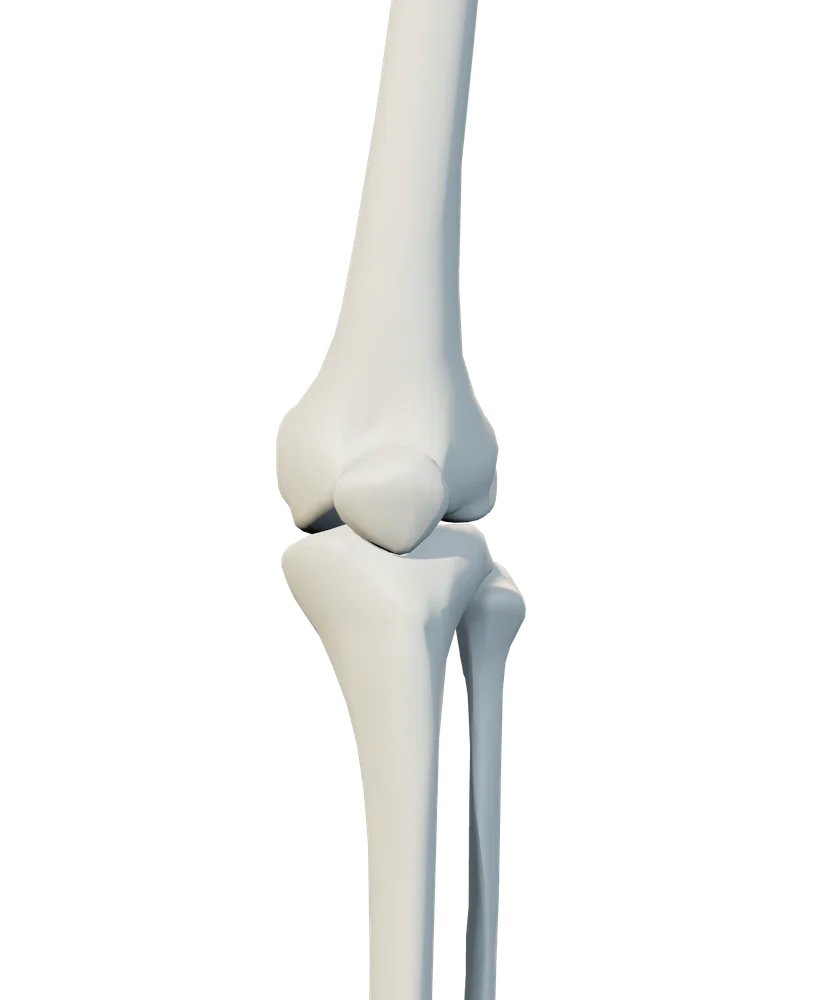
A useful starting point
What this area can tell you.
Joint surfaces, ligaments and nearby tendons share this area. Location does not identify a meniscus tear or prove osteoarthritis. Describe the mechanism if there was an injury, how quickly swelling developed and whether the knee actually locks or gives way. Gradual stiffness and limits on walking are useful details when there was no clear injury. An examination helps determine whether the next step is rehabilitation, imaging or a medical or orthopedic opinion.
Notice the pattern
Three questions to bring with you.
You don’t need to work out a diagnosis before a visit. These details can help you describe what you’re experiencing.
- Did a twist or impact start the pain, or has it built gradually over time?
- Did swelling appear quickly after an injury, later that day or without an obvious trigger?
- Does the knee lock or give way, and how has your comfortable walking distance changed?
When to get help sooner
An acutely swollen knee that cannot bear weight or straighten needs urgent assessment. Redness and warmth with fever require urgent medical care rather than waiting for a routine musculoskeletal visit.
Follow the connection
Possible explanations. Better questions.
These guides explore conditions or patterns that may overlap with this area. They are starting points for a conversation, not a list of diagnoses that can be confirmed from a body map.
Read the result with its limits
How the research fits this area.
The trial applies to diagnosed knee osteoarthritis. Its physical-therapy findings do not establish a diagnosis or treatment for an acute ligament injury, a locked knee or every source of inner-knee pain.
How we select and explain sources ↗Follow the evidence
Research, with context.
Published sources behind the discussion. Read the findings alongside the limits; a study is not a diagnosis or a promise of a result.
Physical Therapy versus Glucocorticoid Injection for Osteoarthritis of the Knee
156 patients with knee osteoarthritis in the US military health system.
What it foundPatients assigned physical therapy had less pain and disability at one year than those assigned glucocorticoid injection.
What it cannot tell usThis was a physical-therapy trial in a particular setting. It does not establish cartilage regeneration or validate every treatment offered for knee pain.
Publication details & citation
Deyle et al. Physical Therapy versus Glucocorticoid Injection for Osteoarthritis of the Knee. New England Journal of Medicine. 2020. DOI: 10.1056/NEJMoa1905877.
Read the publication record
Read our editorial policy for how sources and clinical review are identified.
Your next step
Bring your questions.
We’ll start there.
An assessment can help clarify the pattern, discuss suitable care, and identify when another clinician should be involved.
Anatomy: BodyParts3D, © DBCLS, CC BY 4.0. Model & rendering credits. Return to the full body explorer.