03 / Understand the area
Inside of the elbow
The inner elbow contains tendon attachments and a nerve that continues toward the ring and little fingers.
An educational guide for either side of the body. Location alone cannot tell us the cause of a symptom.
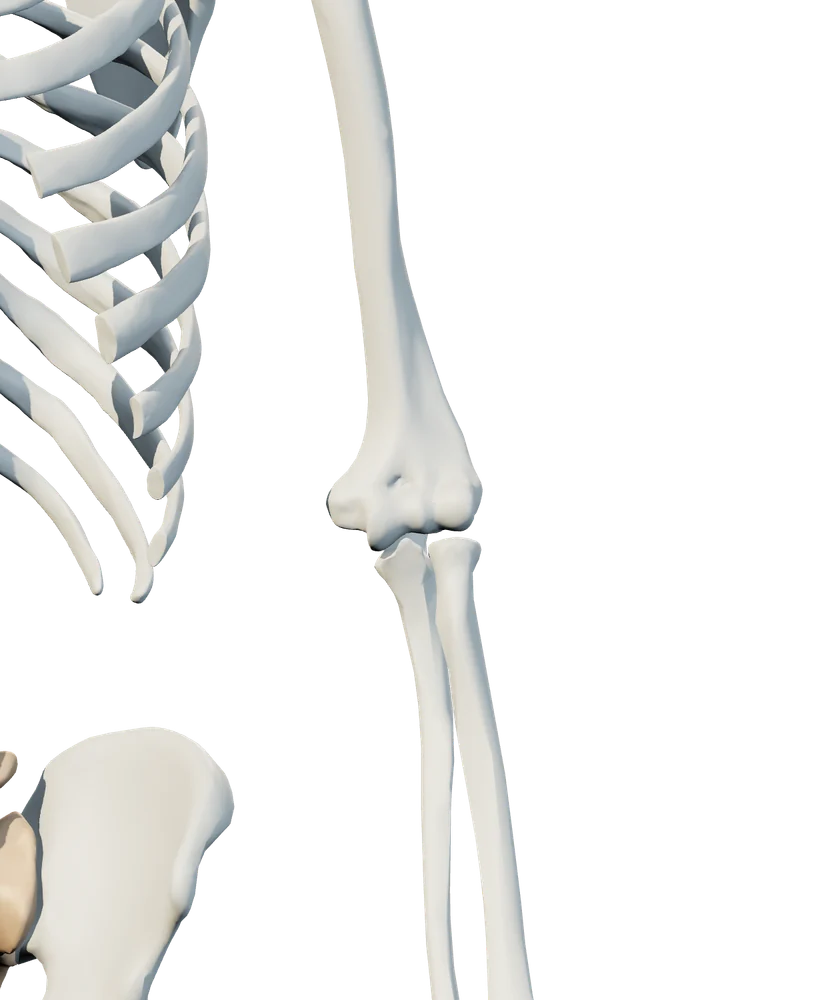
A useful starting point
What this area can tell you.
Pain with repeated gripping or throwing may raise a tendon question, while tingling into the ring or little finger raises a nerve question. These can overlap and should not be settled by the nickname golfer’s elbow. Note whether leaning on the elbow or keeping it bent changes symptoms, as well as any change in hand coordination. An examination can help separate local loading pain from a nerve problem or symptoms originating farther up the arm.
Notice the pattern
Three questions to bring with you.
You don’t need to work out a diagnosis before a visit. These details can help you describe what you’re experiencing.
- Is the main symptom aching at the elbow, or tingling into the ring or little finger?
- Does leaning on the elbow or holding it bent change the symptoms?
- Has throwing, gripping or hand coordination changed since the pain began?
When to get help sooner
Progressive finger numbness, hand weakness or loss of coordination needs prompt medical assessment. A hot, swollen elbow with fever or a major injury needs urgent care.
Follow the connection
Possible explanations. Better questions.
These guides explore conditions or patterns that may overlap with this area. They are starting points for a conversation, not a list of diagnoses that can be confirmed from a body map.
Elbow tendinopathy
Pain with gripping or lifting, often called tennis elbow, and the evidence around treatment choices.
Read the guide Condition guideArm & leg pain
Local joint and muscle symptoms versus pain traveling along a nerve.
Read the guide Condition guideNeck pain
Stiffness, referred pain and nerve symptoms: understand the questions an examination should answer.
Read the guideRead the result with its limits
How the research fits this area.
The linked elbow trial studied the outside of the elbow, not the inside or ulnar nerve symptoms. It helps explain why a familiar tendon label is not enough to transfer treatment evidence.
How we select and explain sources ↗Follow the evidence
Research, with context.
Published sources behind the discussion. Read the findings alongside the limits; a study is not a diagnosis or a promise of a result.
Effect of corticosteroid injection, physiotherapy, or both on clinical outcomes in patients with unilateral lateral epicondylalgia: a randomized controlled trial
165 adults with lateral elbow pain lasting more than six weeks.
What it foundSteroid recipients had lower recovery and more recurrence at one year than placebo recipients. Physiotherapy did not significantly change one-year recovery or recurrence.
What it cannot tell usResults concern the studied approaches to persistent lateral elbow pain. They do not establish that chiropractic care is superior.
Publication details & citation
Coombes et al. Effect of corticosteroid injection, physiotherapy, or both on clinical outcomes in patients with unilateral lateral epicondylalgia: a randomized controlled trial. JAMA. 2013. DOI: 10.1001/jama.2013.129.
Read the publication record
Read our editorial policy for how sources and clinical review are identified.
Your next step
Bring your questions.
We’ll start there.
An assessment can help clarify the pattern, discuss suitable care, and identify when another clinician should be involved.
Anatomy: BodyParts3D, © DBCLS, CC BY 4.0. Model & rendering credits. Return to the full body explorer.