03 / Understand the area
Thumb side of the wrist
Pinching, lifting a child or turning a lid can draw attention to the tendons and joints around the thumb side of the wrist.
An educational guide that covers the left and right sides alike. Where it hurts is a useful clue, but only a clue.
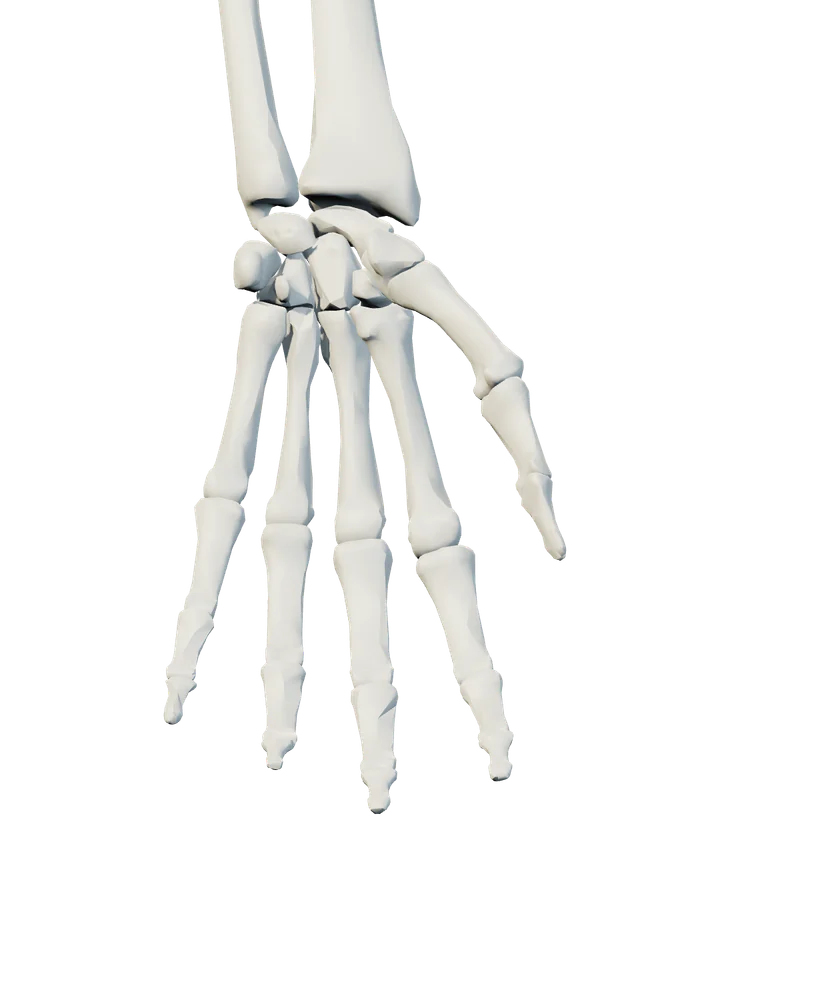
A useful starting point
What this area can tell you.
Pain here may come from a tendon or a joint, but a fall onto your hand raises a different concern: an injury to one of the wrist bones. Tenderness near the base of the thumb that hangs on after a fall needs to be checked, even when the swelling doesn't look like much. Tingling in the thumb is a different thing from pain when you move it. How it started, and the exact task that's hard, tell us where to look: the tendons, how the joint moves, the nerves, or an injury.
Notice the pattern
Three questions to bring with you.
You don't need to know what it is before you come in. These are details that help when you tell us what you're feeling.
- Did the pain start after a fall, or slowly with repeated pinching or lifting?
- Is the pain at the thumb joint, along the wrist, or does your thumb tingle too?
- What's hardest: opening a lid, holding a cup or pushing up through your hand?
When to get help sooner
Thumb-side wrist pain after a fall needs prompt assessment for a possible fracture; some scaphoid fractures are not visible on the first X-ray. A cold or numb hand or obvious deformity needs urgent care.
Follow the connection
Possible explanations. Better questions.
These guides cover conditions and patterns that may overlap with this area. Think of them as a place to start our conversation: no body map can tell you which one, if any, you have.
What the studies found, and where they stop
How the research fits this area.
We've included carpal tunnel research because of the overlapping thumb-tingling pattern. It doesn't test treatment for thumb tendon pain, thumb arthritis or a scaphoid fracture.
How we select and explain sources ↗Follow the evidence
Research, with context.
Selected published sources behind what we've written, each with what it found and what it can't tell us. We give you both halves because no paper can diagnose you or predict how your own care will go.
The effectiveness of corticosteroid injection versus night splints for carpal tunnel syndrome: 24-month follow-up of a randomized trial
Follow-up of 234 adults randomized to injection or night splinting for mild-to-moderate carpal tunnel syndrome.
What it foundSymptom, function and pain scores did not significantly differ between the groups at 12 or 24 months.
What it can't tell usAbout 71% to 73% responded at 24 months. Severe carpal tunnel syndrome was outside this comparison, and the trial didn't test chiropractic care.
Publication details & citation
Burton et al. The effectiveness of corticosteroid injection versus night splints for carpal tunnel syndrome: 24-month follow-up of a randomized trial. Rheumatology. 2023. DOI: 10.1093/rheumatology/keac219.
Read the publication record
Our editorial policy explains how to read these sources and what our clinical-review labels mean.
Your next step
Bring your questions.
We’ll start there.
Your answers to those three questions are where we start. We go over your history and symptoms, examine you, and explain what we found before we recommend anything. If it turns out to be something another doctor should look at, we'll tell you.
Anatomy: BodyParts3D, © DBCLS, CC BY 4.0. Model & rendering credits. Return to the full body explorer.