03 / Understand the area
Fingers & grip
The affected fingers, the type of symptom and changes in dexterity can be more informative than saying that the whole hand hurts.
An educational guide for either side of the body. Location alone cannot tell us the cause of a symptom.
A useful starting point
What this area can tell you.
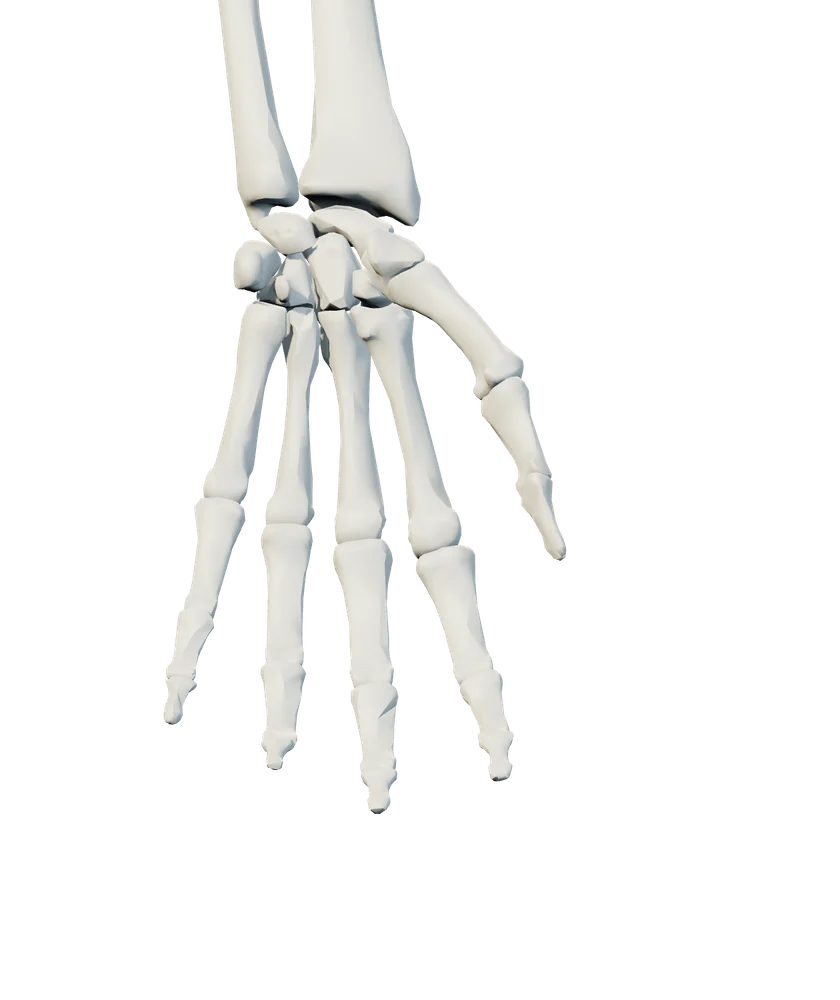
Tingling, joint swelling and a finger that catches are different patterns. Median nerve symptoms often involve the thumb through part of the ring finger, while little-finger symptoms may lead an examination elsewhere. Joint stiffness or swelling also deserves attention, especially when several joints or both hands are affected. Record real changes such as difficulty with buttons, handwriting or keys. An assessment can then consider nerves, tendons and joints without assuming every hand problem comes from the wrist.
Notice the pattern
Three questions to bring with you.
You don’t need to work out a diagnosis before a visit. These details can help you describe what you’re experiencing.
- Which individual fingers are affected, and is the symptom pain, tingling, swelling or catching?
- Are both hands involved, and how long does stiffness last after waking?
- Has handwriting, fastening buttons or holding keys changed?
When to get help sooner
Sudden hand weakness with facial drooping or speech difficulty needs emergency care. A red, hot, swollen finger or joint with fever needs urgent assessment; progressive numbness or weakness also needs prompt review.
Follow the connection
Possible explanations. Better questions.
These guides explore conditions or patterns that may overlap with this area. They are starting points for a conversation, not a list of diagnoses that can be confirmed from a body map.
Carpal tunnel syndrome
Hand tingling, median nerve compression and the importance of recognizing weakness.
Read the guide Condition guideArm & leg pain
Local joint and muscle symptoms versus pain traveling along a nerve.
Read the guide Condition guideNeck pain
Stiffness, referred pain and nerve symptoms: understand the questions an examination should answer.
Read the guideRead the result with its limits
How the research fits this area.
The carpal tunnel trial applies to diagnosed mild-to-moderate median nerve compression. It does not explain swollen finger joints, symptoms isolated to the little finger or progressive weakness.
How we select and explain sources ↗Follow the evidence
Research, with context.
Published sources behind the discussion. Read the findings alongside the limits; a study is not a diagnosis or a promise of a result.
The effectiveness of corticosteroid injection versus night splints for carpal tunnel syndrome: 24-month follow-up of a randomized trial
Follow-up of 234 adults randomized to injection or night splinting for mild-to-moderate carpal tunnel syndrome.
What it foundSymptom, function and pain scores did not significantly differ between the groups at 12 or 24 months.
What it cannot tell usAbout 71–73% responded at 24 months. Severe carpal tunnel syndrome was outside this comparison, which did not test chiropractic treatment.
Publication details & citation
Burton et al. The effectiveness of corticosteroid injection versus night splints for carpal tunnel syndrome: 24-month follow-up of a randomized trial. Rheumatology. 2023. DOI: 10.1093/rheumatology/keac219.
Read the publication record
Read our editorial policy for how sources and clinical review are identified.
Your next step
Bring your questions.
We’ll start there.
An assessment can help clarify the pattern, discuss suitable care, and identify when another clinician should be involved.
Anatomy: BodyParts3D, © DBCLS, CC BY 4.0. Model & rendering credits. Return to the full body explorer.