Clarksville TN Chiropractors May Help Scoliosis
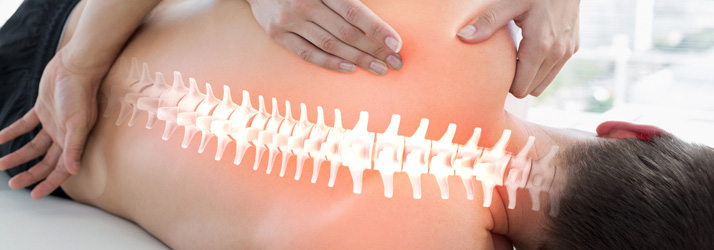
Can chiropractors help scoliosis? They don't straighten it. Scoliosis is a sideways curve of the spine, and when a curve hurts, what a chiropractor works on is the pain, the stiffness and how you move. Our scoliosis guide covers the condition and its treatment options in more depth.
What is scoliosis?
A sideways curve counts as scoliosis once it measures more than ten degrees on an X-ray, using a measurement called the Cobb angle. The most common kind is idiopathic, which means no cause is found, and it usually shows up during the growing years. Other curves come from a neurological condition, an injury, or vertebrae that formed differently before birth. Functional scoliosis is different again: something outside the spine, like a leg length difference or a muscle spasm, shifts it to one side, and the vertebrae themselves aren't deformed. A structural curve isn't a posture habit, and standing up straighter won't undo it.
What are the common symptoms of scoliosis?
In teenagers, idiopathic scoliosis frequently doesn't hurt at all. That's why it's often spotted by eye: one shoulder higher than the other, an uneven waist, a lean to one side. Significant pain isn't a typical part of it, so pain like that is a reason to get a medical assessment, not something to chalk up to the curve. Larger curves, and the degenerative curves that develop in adults, are more often linked to back pain, stiffness and tired muscles. Effects on the heart and lungs go with severe curves, not with the mild and moderate curves that make up most cases.
Can chiropractic treatment straighten a scoliosis curve?
No. Hands-on treatment, including adjustments, doesn't straighten a structural curve, and neither does posture work. None of it changes the Cobb angle on your X-ray. For a curve that's being monitored, the established options are observation, a brace while someone is still growing, scoliosis-specific exercise programs, and surgery for large or worsening curves. The specialist following the curve is the right person to guide those decisions.
When a structural curve is painful, hands-on care is aimed at the pain, the stiffness and how you move, not at the curve. Changes in pain and activity are a separate question from the curve: feeling less stiff doesn't tell you the curve has changed.
We'll tell you what we find, including when what we find isn't something we treat. If we are not able to help you with your problem or are unable to reduce your pain levels, we will make sure to give you a recommendation to another experienced provider.
What did the scoliosis bracing research find?
A trial called BrAIST compared bracing with observation in teenagers whose curves were at risk of getting worse. In its randomized group, 75% of those assigned a brace reached skeletal maturity without their curve progressing to 50 degrees or more, compared with 42% of those assigned observation. That's a result about curve progression during growth, not about a straight spine or pain relief.
The study had a randomized group and a group that picked their own treatment, and its findings apply to the teenagers it selected. They don't carry over to an adult's degenerative curve, and they aren't evidence for adjustments. How age, remaining growth, curve size and change over time affect your options is a question for the doctor following the curve.
What to bring if your scoliosis is being monitored
A posture photo shows how you stand today. The monitoring record shows what the curve has been doing.
| What to bring | The question it helps answer |
|---|---|
| Previous imaging reports with dates | Has the measured curve changed over time? |
| The specialist's follow-up plan | When is the next check due, and what would bring it forward? |
| Pain and activity notes | Is there a separate pain problem to look into? |
| Brace or exercise instructions you've already been given | How can everyone treating you stay on the same page? |
New weakness, trouble walking or substantial pain with no clear explanation needs a medical assessment, and shouldn't automatically be blamed on the curve. If it's everyday pain or stiffness that isn't urgent, call our Clarksville office. We'll go over the monitoring you already have and see if a muscle-and-joint exam makes sense alongside it.
Follow the evidence
Research, with context.
Selected published sources behind what we've written, each with what it found and what it can't tell us. We give you both halves because no paper can diagnose you or predict how your own care will go.
Effects of bracing in adolescents with idiopathic scoliosis
242 adolescents with the usual indications for bracing, in randomized and patient-preference groups.
What it foundIn the randomized group, 75% assigned bracing versus 42% assigned observation reached skeletal maturity without progression to a curve of at least 50 degrees.
What it can't tell usIt supports appropriate orthopedic assessment and bracing for selected adolescents. It gives no evidence that adjustments reverse scoliosis.
Publication details & citation
Weinstein et al. Effects of bracing in adolescents with idiopathic scoliosis. New England Journal of Medicine. 2013. DOI: 10.1056/NEJMoa1307337.
Read the publication record
Our editorial policy explains how to read these sources and what our clinical-review labels mean.