Clarksville TN Chiropractor Discusses a Healthier Spine
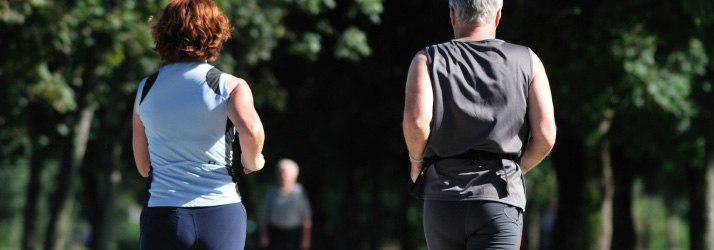
To us, a healthier spine is a practical thing: a back that lets you work, sleep, move and do the things that matter to you. It doesn't take a perfectly straight back, or holding one posture all day. If pain is changing what you can do, we'd start with its pattern and your goals.
Does exercise help back pain?
For adults with chronic nonspecific low back pain, a Cochrane review of 249 exercise trials found exercise probably improves pain compared with no treatment, usual care or placebo. The average gains in function were smaller, and the programs varied. Walking, strength work and other activity can all be part of a plan that fits your health and what you enjoy.
That backs staying active, not one special exercise everyone has to do. What matters is where you start, how your back handles it, and how you build while symptoms stay manageable. An exercise plan isn't the starting point for a new fracture, an infection or a worsening nerve problem. Those need a different assessment first.
In our office, active rehabilitation and therapeutic exercise may be used to address weakness, stability, mobility and muscle imbalance.
Everyday habits for a healthier spine
| Everyday situation | The question behind it | Changes to consider |
|---|---|---|
| Working at a screen | When does the discomfort start? | Reach and screen position, and chances to change position |
| Moving a heavy object | Is the load awkward, repeated or more than you can handle? | Splitting the load, using equipment or getting help |
| A disrupted night's sleep | Is pain waking you, or is sleep hard for other reasons? | A comfortable position; ongoing sleep trouble is its own issue |
| Getting back to exercise | What can you do now, and how do you feel afterward? | A starting level you can manage today, then a gradual build |
These are starting points to adapt, and none of them guarantees you won't get hurt. OSHA's workstation guide has practical adjustments for seated work. We've written more about sitting too much, lifting and back injury and sleep.
Can you prevent low back pain?
Partly. A systematic review of low back pain prevention found exercise combined with education reduced the risk of an episode. Education alone, back belts and shoe insoles didn't show a preventive effect. Results differed by outcome and the quality of the evidence.
Lower risk isn't zero risk, so a flare-up despite a good routine doesn't mean you did something wrong. And nothing in this review shows that scheduled adjustments protect a healthy spine from future injury.
When back pain lingers, what's worth measuring
A pain score is only part of the story. An activity says more: walking to the store, getting through a shift, sitting long enough for a meal. How hard that is now, and later on, is the real measure. A treatment can feel good without moving that goal, and that difference matters when you're deciding to keep going.
The American College of Physicians guideline on low back pain includes several non-drug approaches, and manual treatment is one option for selected cases. Like any treatment, it has possible benefits, risks and alternatives to weigh, including exercise. It belongs after an exam, not in place of one. And if it isn't moving the activity you're tracking, it's time to change the plan.
When does back pain need a doctor right away?
Go to an emergency room right away if you have any of these:
- Loss of bladder or bowel control, or new difficulty passing urine
- A change in the sensation of passing urine, such as not feeling the flow, or losing the sense of when the bowel is full
- Numbness in the saddle area: the inner thighs, buttocks, or around the genitals
- New sexual dysfunction, including new numbness in the genitals
- New or worsening weakness in both legs
- Severe back pain with fever, or an unexplained fever with new back pain. Either alone is enough
These can be signs of serious conditions, including cauda equina syndrome or a spinal infection. Back pain also needs a prompt medical review after significant trauma, or with new or progressing weakness in one leg, spreading numbness, unexplained weight loss or a history of cancer. The NHS also sets out when back pain needs a GP or emergency care.
Having your back pain checked in Clarksville
Bring a timeline of your symptoms, what you've tried and any reports. At the exam we'll check how your back's joints move, where muscles are tight and for signs of an irritated nerve, then recommend a plan built around what we find and the activity you want back. If it isn't coming from your muscles and joints, we'll say so and point you to a medical evaluation. Our back pain guide goes deeper. If nothing above is urgent and your back is getting in the way of work or sleep, give our office a call.
Follow the evidence
Research, with context.
Selected published sources behind what we've written, each with what it found and what it can't tell us. We give you both halves because no paper can diagnose you or predict how your own care will go.
Prevention of Low Back Pain: A Systematic Review and Meta-analysis
21 randomized trials involving 30,850 participants, examining interventions to prevent low-back pain.
What it foundExercise with education reduced the risk of a low-back-pain episode. Education alone, back belts and shoe insoles did not show a preventive effect.
What it can't tell usEvidence quality varied by intervention and outcome, and the search ended in 2014. It doesn't suggest every injury can be prevented, and it doesn't show that routine adjustments prevent back pain.
Publication details & citation
Steffens et al. Prevention of Low Back Pain: A Systematic Review and Meta-analysis. JAMA Internal Medicine. 2016. DOI: 10.1001/jamainternmed.2015.7431.
Read the publication recordExercise therapy for chronic low back pain
249 trials of exercise therapy in adults with chronic nonspecific low-back pain.
What it foundExercise probably improves pain compared with no treatment, usual care or placebo. Average improvements in function were smaller.
What it can't tell usThe programs, and what they were compared with, varied. The review doesn't point to one best exercise for everyone, and it doesn't apply to a new fracture, an infection or a neurological problem that's getting worse.
Publication details & citation
Hayden et al. Exercise therapy for chronic low back pain. Cochrane Database of Systematic Reviews. 2021. DOI: 10.1002/14651858.CD009790.pub2.
Read the publication record
Our editorial policy explains how to read these sources and what our clinical-review labels mean.